Evil Dead the Musical at Alberta Theatre Projects

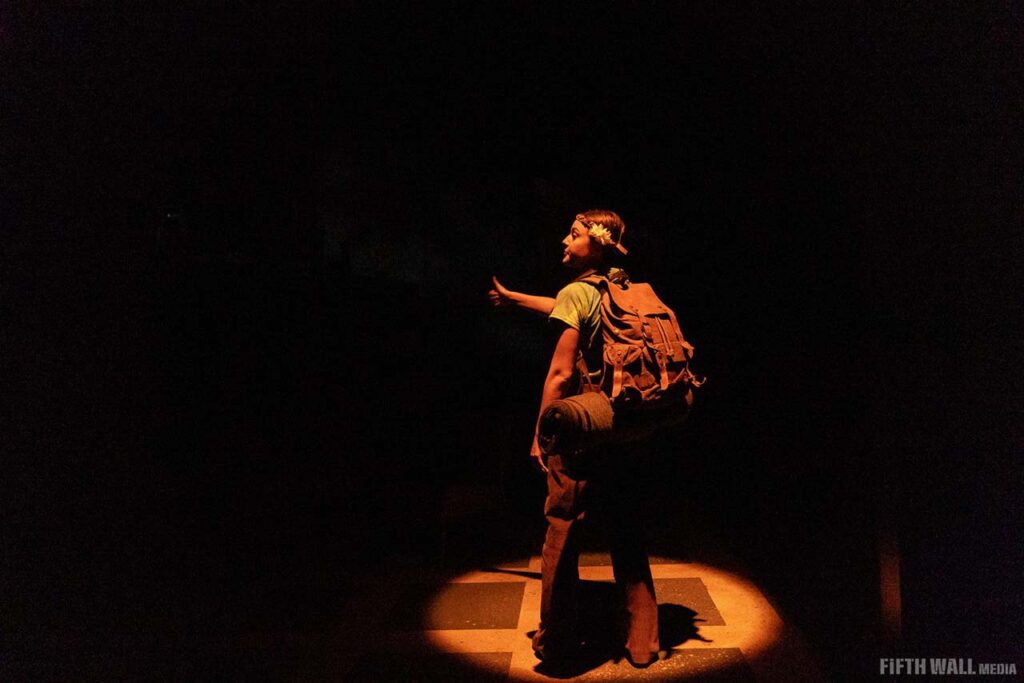
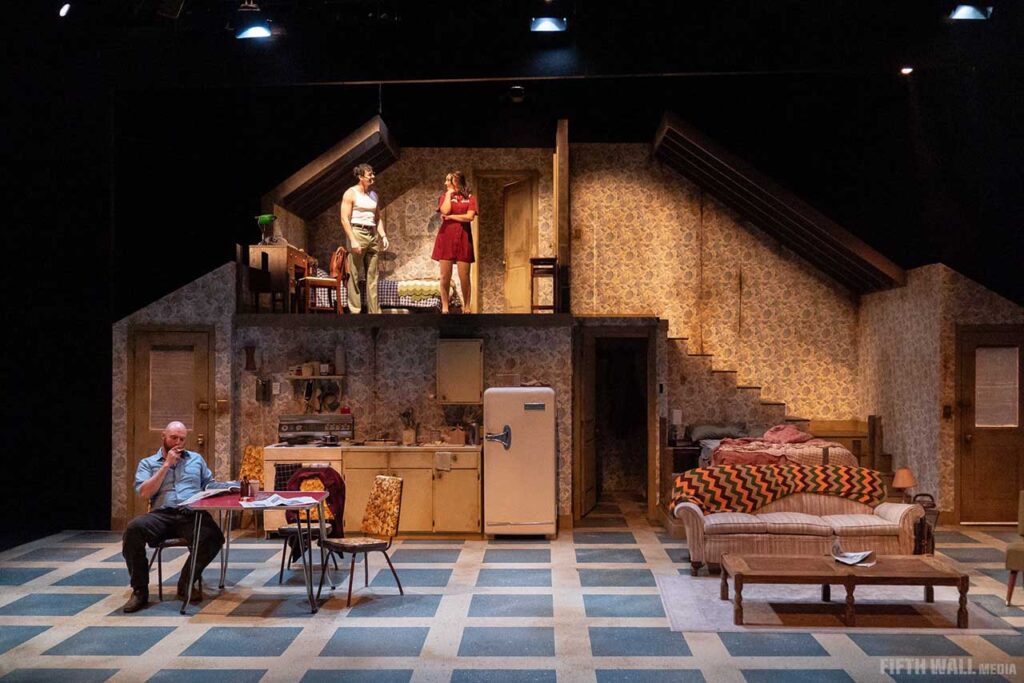
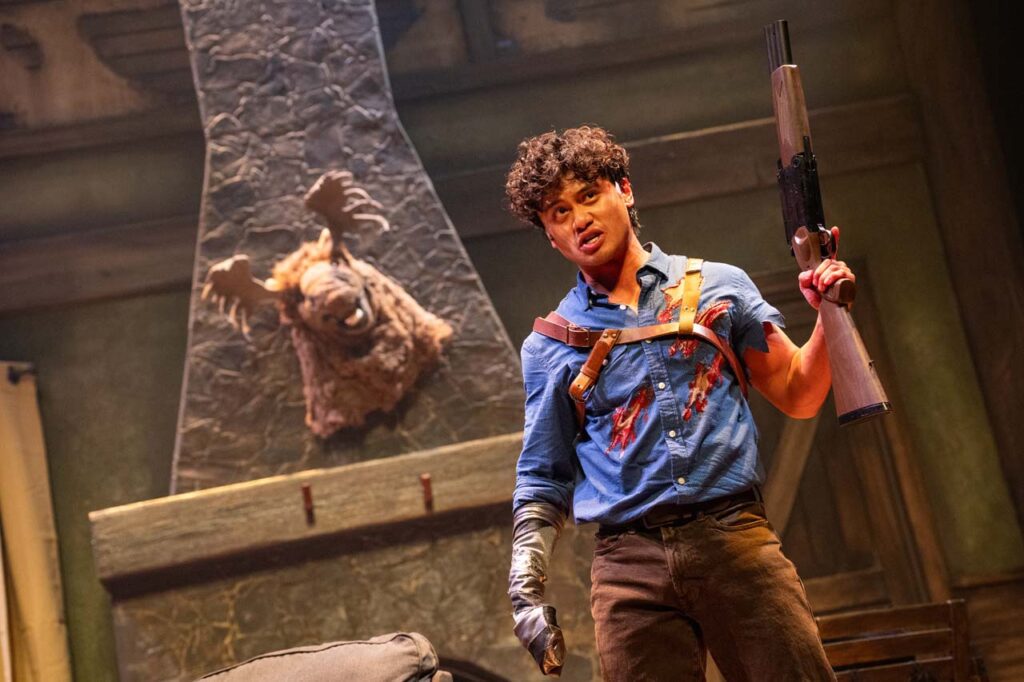
Mark Sinongco in Evil Dead The Musical at Alberta Theatre Projects. Photo by Tim Nguyen, Fifth Wall Media. Set Design by Anton deGroot. Costume Design by Deitra Kalyn. Lighting Design by Ajay Badoni.

In troubled times who doesn’t need a laugh? I mean there’s no reason you can’t laugh during untroubled times but these days with all the toxic social media, endless tsunami of misinformation, and foreign funded campaigns to turn neighbour against neighbour we could use a night out at the theatre. We could use a laugh. We could use something over the top. Something farcical and musical and able to make us forget all the other horrors going on in the world.

And the good news is that right now you can find a bit of gruesome joy by hopping on over to Alberta Theatre Projects and catching their high energy, splatter-filled, pitch-perfect production of Evil Dead the Musical. The production is being produced in assocation with Globe Theatre Regina. Now, of course, if you don’t want to hop you can always walk. It’s just hopping is more fun. And let’s face it Evil Dead the Musical is all about having fun.

Based on the Evil Dead movies and characters created by Sam Raimi the book and lyrics are written by George Reinblatt with music by Frank Cipolla, Christopher Bond, Melissa Morris, and George Reinblatt. The musical was first brought to life as a workshop in Toronto in August 2003 and eventually ended up as an Off-Broadway production in 2006 where it was a huge hit. Since then, the musical has seen hundreds of productions around the world and has become a legendary part of our culture.

The story begins when Ash, Linda, Cheryl, Scott and Shelly drive out to an old, abandoned cabin in the woods, so they can party hard during spring vacation. Mark Sinongco brings an unstoppable energy to playing the buff, ready-for-fun, future demon killer Ash, who leads this band of unlucky campers.
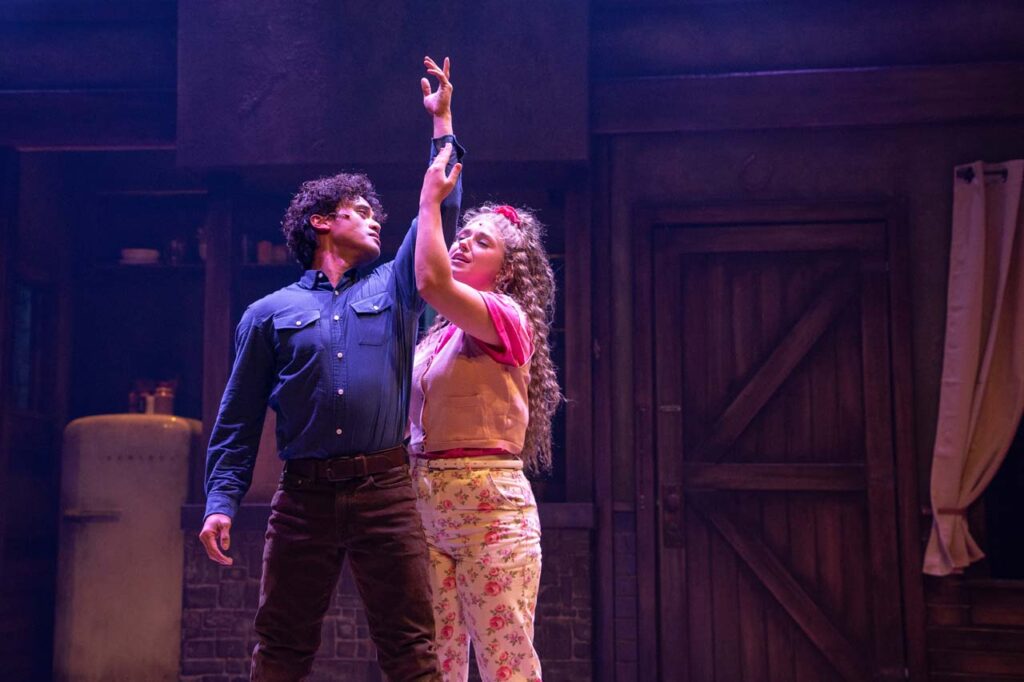
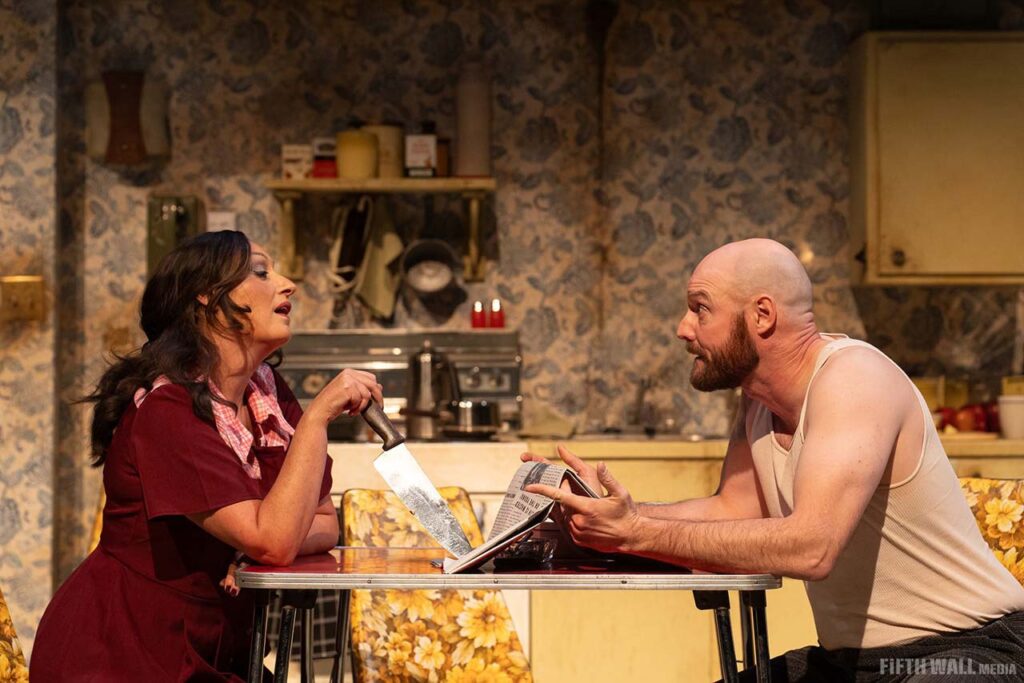
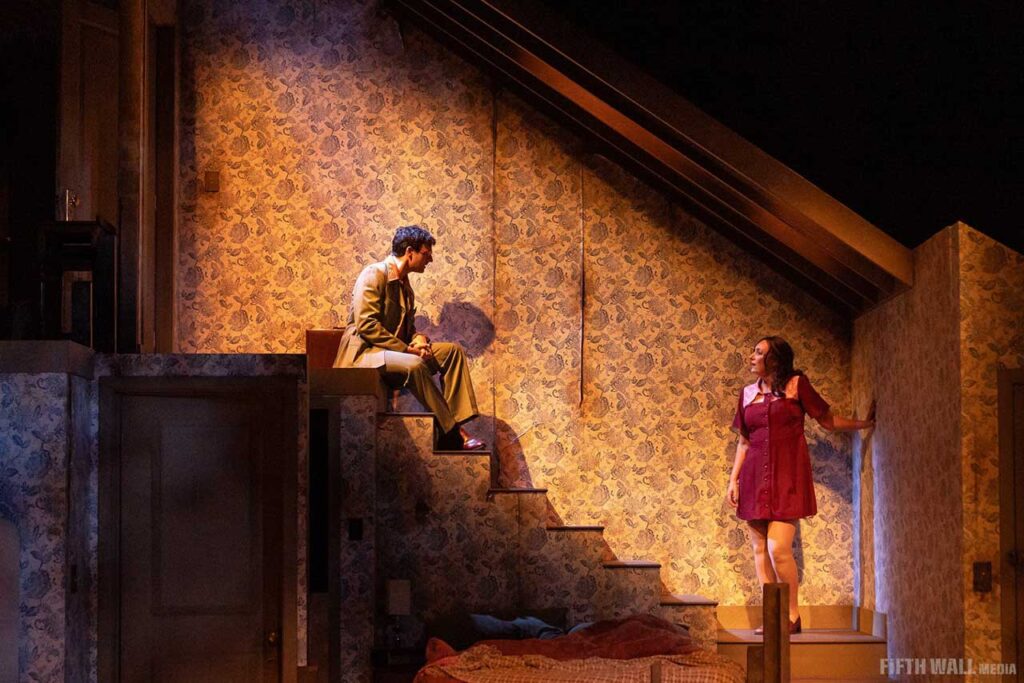
Mark Sinongco and Kenni Chomyn in Evil Dead The Musical at Alberta Theatre Projects. Photo by Tim Nguyen, Fifth Wall Media. Set Design by Anton deGroot. Costume Design by Deitra Kalyn. Lighting Design by Ajay Badoni.

Kenni Chomyn is his girlfriend Linda who just wants to have fun and can’t wait to spend a week snuggling with her honey bun. Caulin Moore is Ash’s best friend Scott who is your typical sex-obsessed teenager who hooked up a few hours ago with his new girlfriend Shelly. Amanda Trapp plays Shelly as your typical party girl you find in these horror movies and is a perfect match for Scott as all she wants to do is have sex and get wasted.

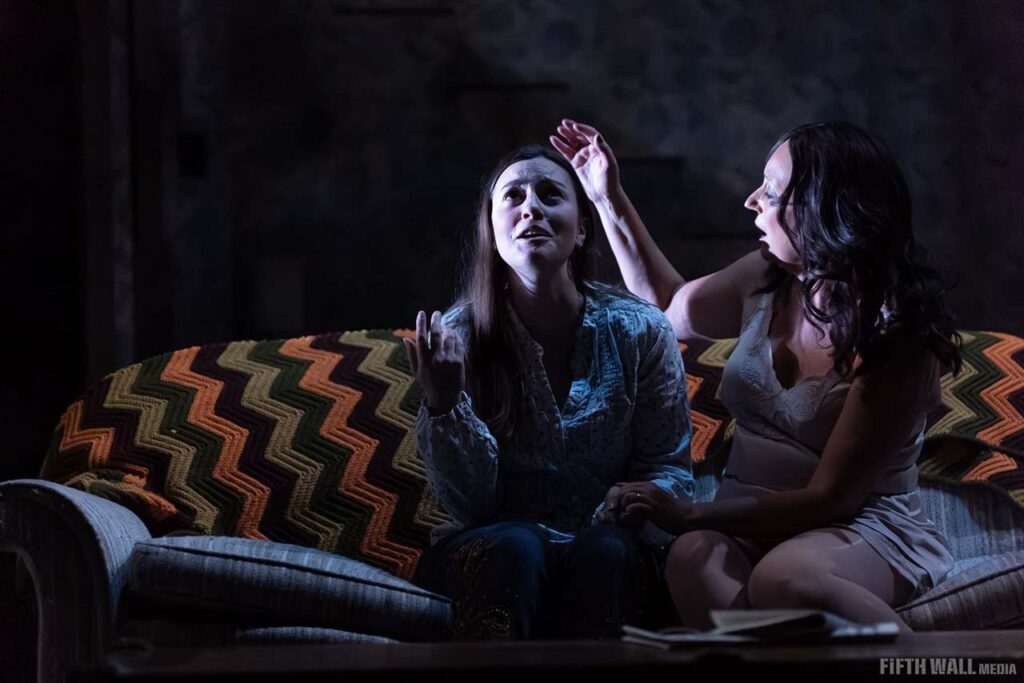
Sierra Haynes plays Ash’s sister Cheryl as a bookish nerd who is the fifth wheel in all this but to be honest has some of the best puns and lines in the play once she becomes a demon. Cheryl is looking forward to making some snacks out of Hershey bars and Chex while enjoying nature’s tranquility and getting a chance to catch up on her sleep and do some reading.  
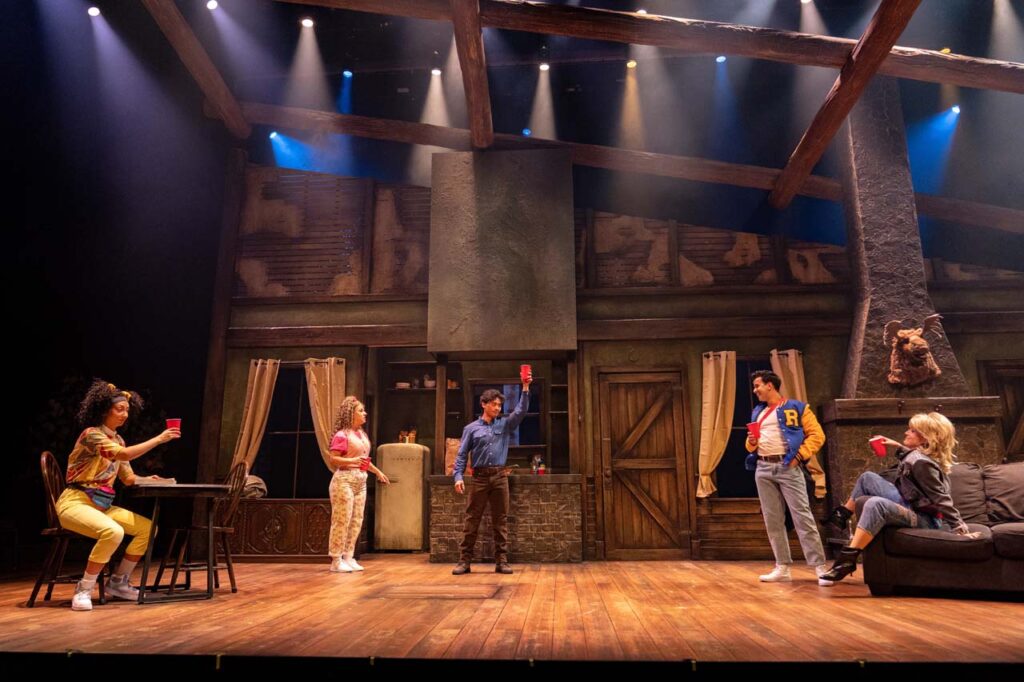
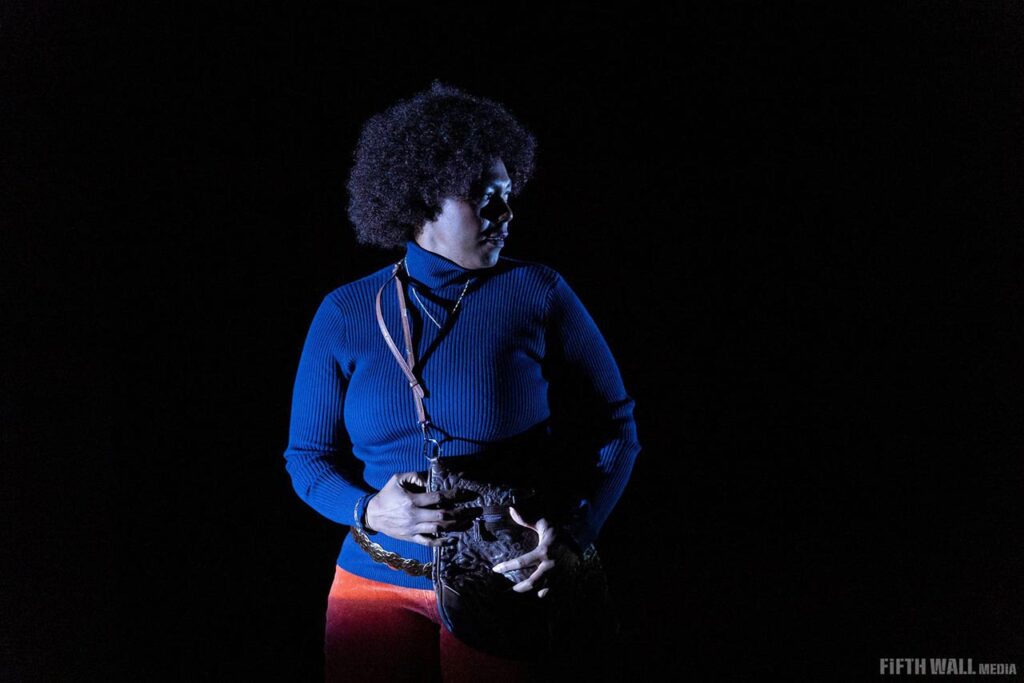
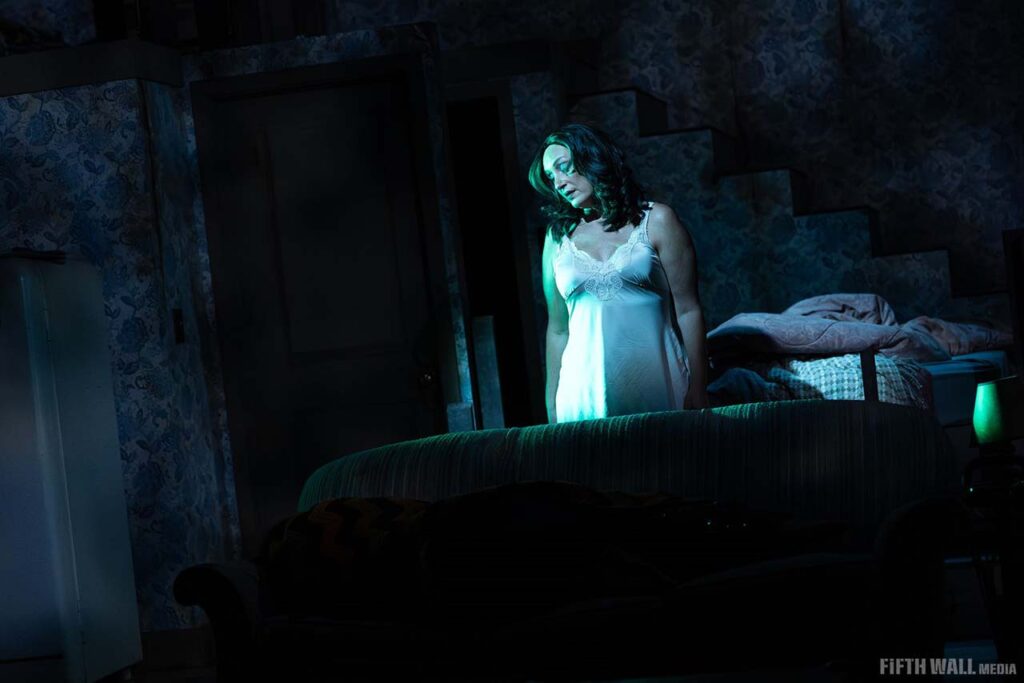
Cast members of Evil Dead The Musical at Alberta Theatre Projects. Photo by Tim Nguyen, Fifth Wall Media. Set Design by Anton deGroot. Costume Design by Deitra Kalyn. Lighting Design by Ajay Badoni.

When the group arrives at the cabin after walking through the woods and across the only wooden bridge you can take to get to the cabin, they are greeted with the spooky whispering of demons urging this doomed group of friends to “Join Us.” Then when the cellar door pops open, rather than getting the hell out of there, Ash and Scott jump down into the cellar and return with an old cassette tape recorder and an ancient book of spells.

When they play back the tape they hear the voice of Professor Raymond Knowby who explains that the book they now hold comes from the Castle of Candar and is called the Necronomicon Ex Mortis which translates roughly into the Book of the Dead.

The book speaks of an evil that roams the forests and warns that the recitation of the book’s passages gives this dark spirit license to possess the living. So, of course they listen to the tape and the phonetic pronunciations of those passages and so the demon possessions and chaos begins including the demonic possession of a mounted moose head on the wall of the cabin given voice by Brent Gill who previously appeared in a production of the Evil Dead in 2012 at the Pumphouse Theatre and which I happened to see.
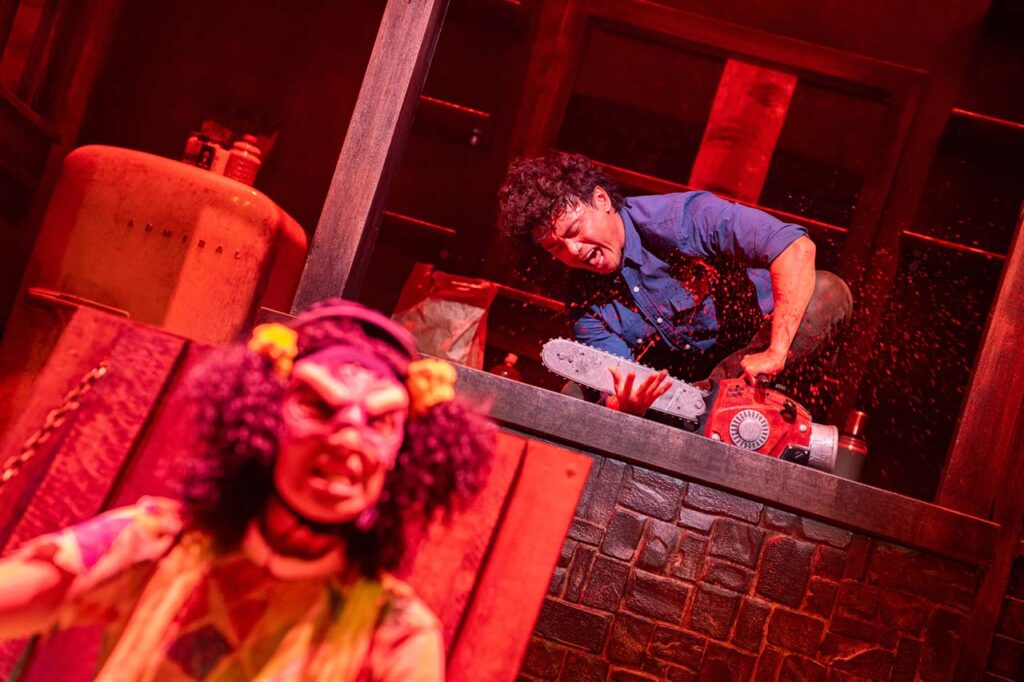
Sierra Haynes and Mark Sinongco in Evil Dead The Musical at Alberta Theatre Projects. Photo by Tim Nguyen, Fifth Wall Media. Set Design by Anton deGroot. Costume Design by Deitra Kalyn. Lighting Design by Ajay Badoni.

One of the fun things about Evil Dead is the splatter zone where audience members get splattered with fake blood. While the Pumphouse production designated the front rows as the splatter zone Alberta Theatre Projects has moved the splatter zone directly onto the stage so that the folks in those seats become a part of the show.

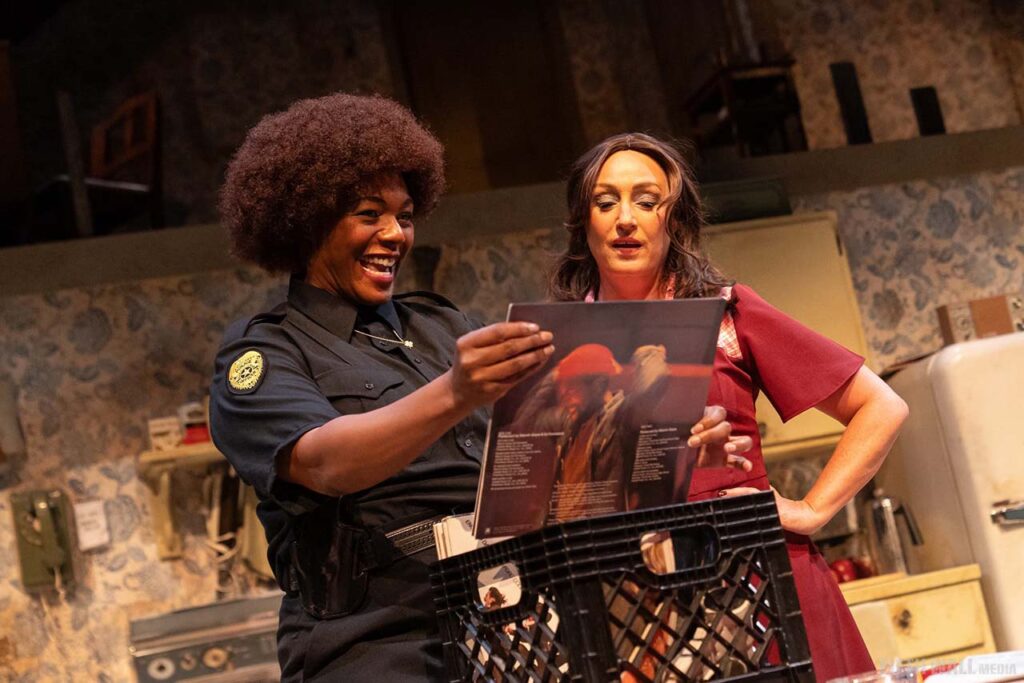
As Ash and his friends fight for their lives back at the cabin, we meet Professor Knowby’s daughter Annie, played by Amanda Trapp as a take-charge no-nonsense woman who has just flown back from Cairo. Nikko Hinayo plays her meek and dominated boyfriend Ed who she meets at the airport. Ed has been tasked with driving them both up to the cabin so they can meet with her father because she has some exciting news. On her archeological expedition to the middle east Annie found some missing pages from the Book of the Dead that she thinks might prove significant.

Unfortunately, when Annie and Ed reach the wooden bridge, it’s been destroyed and their efforts to get to the cabin look dim until Kevin Corey shows up as good old reliable Jake and offers to guide them over an alternative trail to the cabin. They reach the cabin only to find a pile of bodies and Ash with a buzz saw on one hand and the severed head of Linda, his demon possessed girlfriend, in the other. And so, ends Act One.
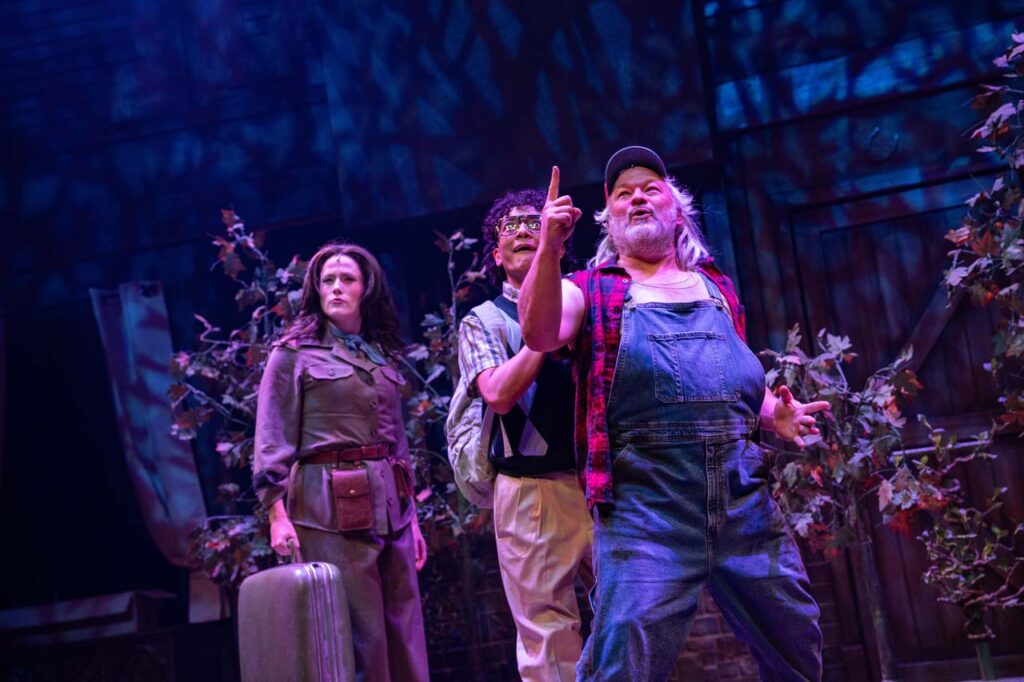
Amanda Trapp, Nikko Hinayo and Kevin Corey in Evil Dead The Musical at Alberta Theatre Projects. Photo by Tim Nguyen, Fifth Wall Media. Set Design by Anton deGroot. Costume Design by Deitra Kalyn. Lighting Design by Ajay Badoni.

Act Two is filled with just as much action and murderous mayhem while it moves the story forward and resolves all of our lingering questions. Will Ash save the day? Will those pages Annie found prove to be important? Will Ash’s malicious severed hand continue to cause chaos? Only those who see the show will ever know.

Much of the fun in Evil Dead comes from the music which includes a collection of bright funny campy musical numbers that deliver laughs while forwarding the story with such memorable tunes as Cabin in the Woods, What the F*ck Was That, Good Old Reliable Jake, Bit Part Demon, and All the Men in My Life Keep Getting Killed By Candarian Demons.

Director Jennifer Brewin has assembled a musically talented and high energy cast that easily switch from choreographed dance moves to bloody stage fighting to broad slapstick comedy and campy one liners, bad puns, and over-the-top farce.
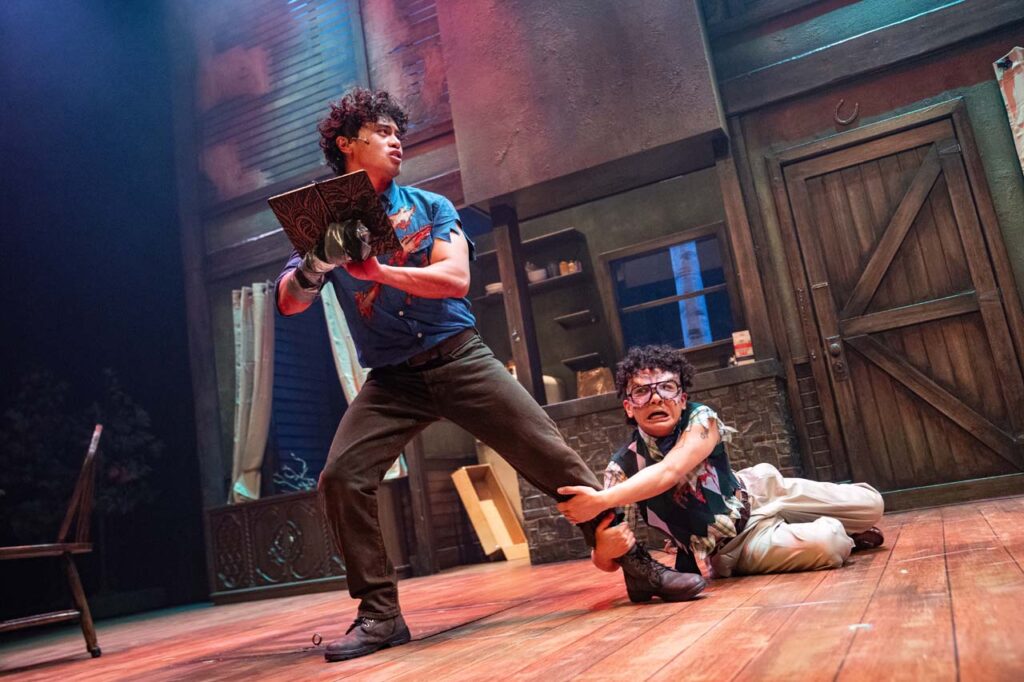
Mark Sinongco and Nikko Hinayo in Evil Dead The Musical at Alberta Theatre Projects. Photo by Tim Nguyen, Fifth Wall Media. Set Design by Anton deGroot. Costume Design by Deitra Kalyn. Lighting Design by Ajay Badoni.

The design team includes set designer Anton DeGroot, costume designer Deitra Kalyn, lighting designer Ajay Badoni, and sound designer Darren Young. All the production elements set the scene and create a creepy atmosphere while providing plenty of space for choreographer Sarah Dowling and fight director Brianna Johnston to take full advantage of the play’s dance numbers and demon fights.

Musical Director Benjamin Redant works with Band Leader Dan Perrott and the rest of the band to be fully a part of the show while the sound mix is designed to not overpower the singing so we don’t miss any of the jokes. Of course, a show like this where we witness the insane on-stage antics of the characters is only made possible by having a great backstage crew that keep everything in order and running smoothly.
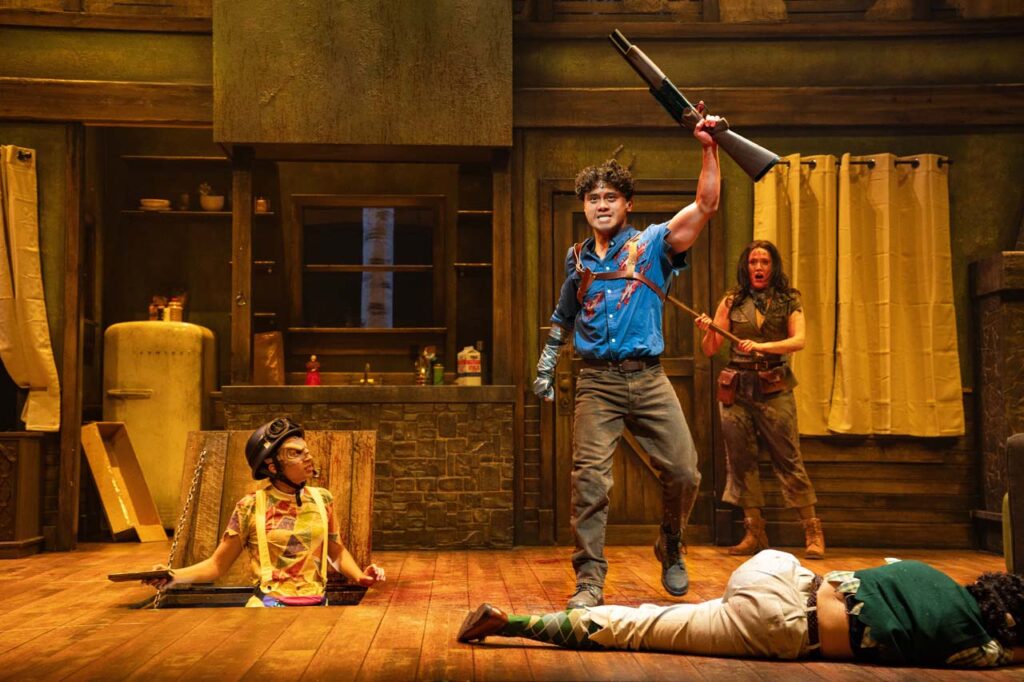
Sierra Haynes, Mark Sinongco, Amanda Trapp and Nikko Hinayo (foreground) in Evil Dead The Musical at Alberta Theatre Projects. Photo by Tim Nguyen, Fifth Wall Media. Set Design by Anton deGroot. Costume Design by Deitra Kalyn. Lighting Design by Ajay Badoni.

While it’s great fun to watch all the demonic shennanigans I think it’s important to remember that you can’t blame a demon for what they do. Nope. It’s just their nature to possess souls and kill people and work towards the destruction of mankind. I mean demons are evil. They are born evil. Created evil. They couldn’t be good even if they wanted. They are true to their nature so we shouldn’t be surprised when demons attack. Humans on the other hand have a choice. That’s where true evil lies.

So, if at this spooky time of the year your mind turns to demons and devils and the forces of darkness and you find yourself in need of some horror comedy make sure you plan on seeing Evil Dead the Musical at Alberta Theatre Projects. The forces of darkness will be on stage until November 14th. Tickets are available online at AlbertaTheatreProjects.com or by calling the box office at 403-294-7402.
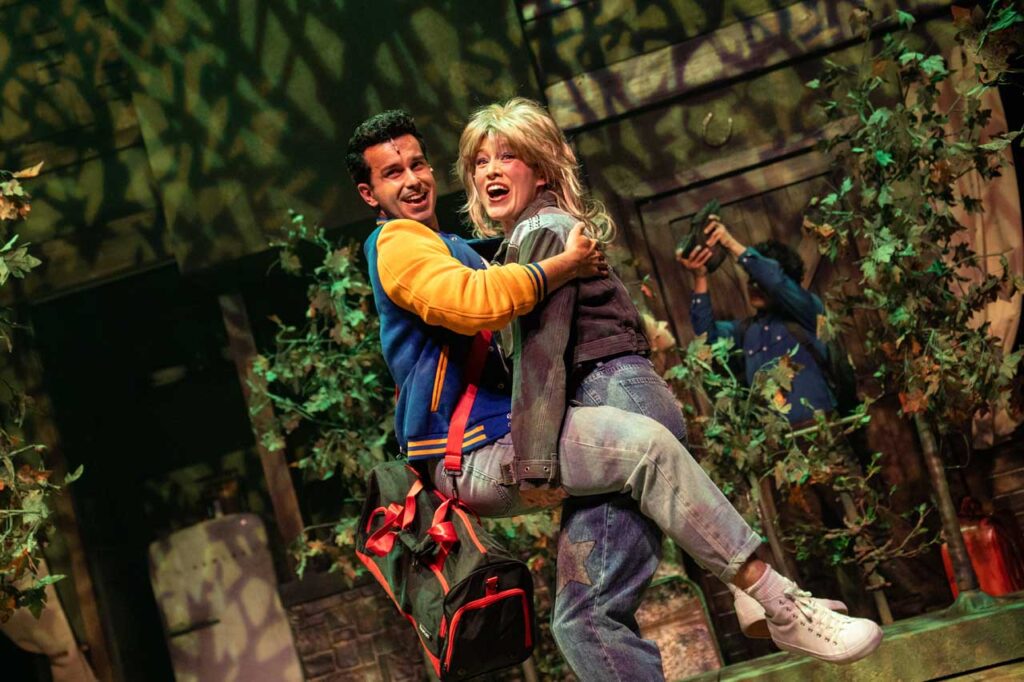
Caulin Moore and Amanda Trapp in Evil Dead The Musical at Alberta Theatre Projects. Photo by Tim Nguyen, Fifth Wall Media. Set Design by Anton deGroot. Costume Design by Deitra Kalyn. Lighting Design by Ajay Badoni.

Evil Dead the Musical
Book & Lyrics by George Reinblatt
Music by Frank Cipolla, Christopher Bond, Melissa Morris & George Reinblatt
Based on Characters Created by Sam Raimi
By Special Arrangement with Renaissance Pictures, Ltd. & Studiocanal
In association with Globe Theatre Regina

Cast (alphabetical)
Kenni Chomyn – Linda
Kevin Corey – Jake
Samantha Currie – Ensemble (understudy Cheryl, Shelly/Annie, Linda)
Brent Gill – Ensemble/Moose (understudy Jake, Ed)
Sierra Haynes – Cheryl
Nikko Hinayo – Ed (understudy Scott)
Caulin Moore – Scott (understudy Ash)
Mark Sinongco – Ash
Amanda Trapp – Shelly/Annie

Creative Team
Jennifer Brewin – Director
Sarah Dowling – Choreographer
Brianna Johnston – Fight Director
Anastasia St. Amand – Intimacy Director
Anton deGroot – Set Design
Deitra Kalyn – Costume Design
Ajay Badoni – Lighting Design
Darren Young – Sound Design
Benjamin Redant – Musical Director
Dan Perrott – Keyboard/Band Leader
Auslen Doell – Guitar
Joel Goundry – Drums
Carissa Sams Rouleau – Stage Manager
Kate Pallesen – Stage Manager Cover (Oct 31)
Millie Ross – Assistant Stage Manager
Niamh McCallion – Apprentice Stage Manager

Photos by Tim Nguyen, Fifth Wall Media.

Published: October 20th, 2026 – Holocene Date: October 20th, 12,026
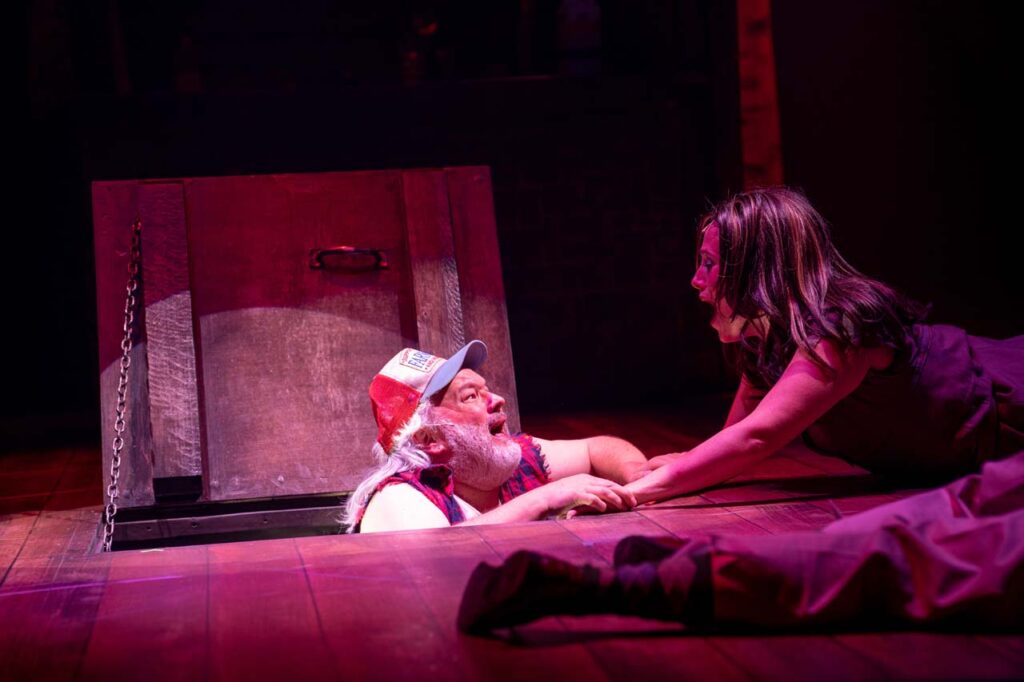
Production still Evil Dead the Musical at Alberta Theatre Projects.
Kevin Corey and Amanda Trapp in Evil Dead The Musical at Alberta Theatre Projects. Photo by Tim Nguyen, Fifth Wall Media. Set Design by Anton deGroot. Costume Design by Deitra Kalyn. Lighting Design by Ajay Badoni.


The Lodger at Vertigo Theatre – Interview with Lauren Brotman

Lauren Brotman, Tyrell Crews, Photo by Fifth Wall Media

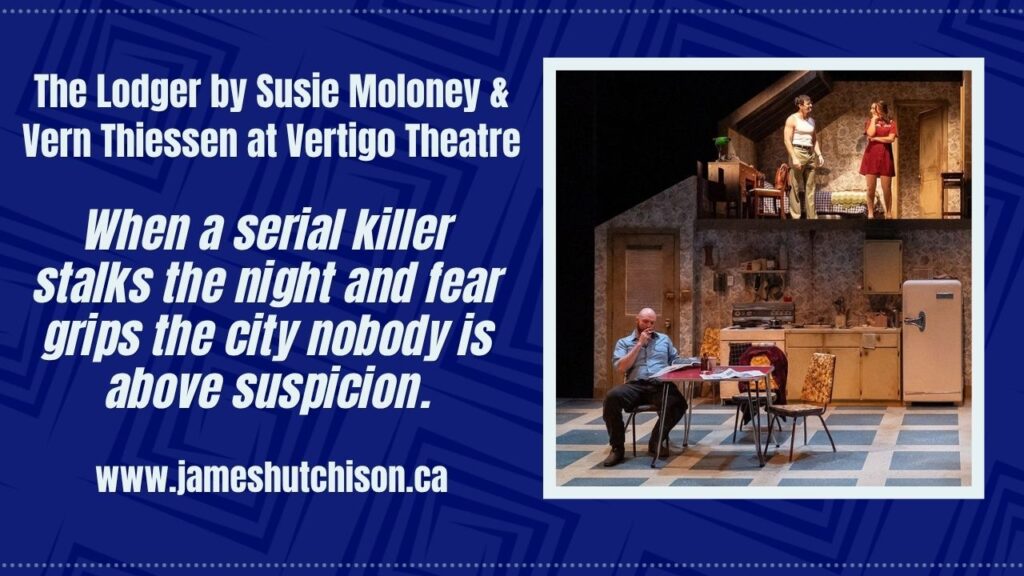
Vertigo Theatre is launching its 50th Anniversary Season with the world premiere of The Lodger by Susie Moloney & Vern Thiessen. When a serial killer stalks the night and fear grips the city nobody is above suspicion.

The Lodger runs until October 25th. Tickets are available online at VertigoTheatre.com or by calling the box office at 403.221.3708.


In 1888 over the course of ten weeks Jack the Ripper brutally murdered five women and terrorized London. It was those murders that inspired Marie Belloc Lowndes to write her 1913 novel The Lodger. And that novel would later be adapted into a 1927 silent movie by the master of suspense Alfred Hitchcock.

The story would be adapted several more times for the silver screen including a 1953 adaptation starring Jack Palance as The Man in the Attic! And Jack Palance the Oscar-winning actor starred as Ebenezer Scrooge in the 1998 television western Ebenezer which is a reimagining of Charles Dickens’ A Christmas Carol in the old West which was filmed in the Calgary area!

What does that have to do with anything? Nothing really but I love the fact that a story can begin in one place and you can draw connections that lead you to some place else because that’s what a lot of fiction is. We take known facts and stories and ideas and play around with them. And through that exploration we connect the dots. In a murder mystery we are always trying to connect the dots to determine the killer. Isn’t that the whole basis of Poirot? The clues are there.

The Lodger, on the other hand, is less mystery about who the murderer is and more about how we handle suspicion. The novel has been adapted into a fast-paced suspense-driven story for the Vertigo stage by Canadian horror novelist Susie Moloney and multi-award-winning playwright Vern Thiessen.

Tyrell Crews, Photo by Fifth Wall Media.

Thiessen and Moloney have set the story in the 1970s. This was the golden age of serial killers. It was also a decade of turmoil as the Vietnam war continued to grab headlines, Richard Nixon was forced to resign from office after the Watergate scandal, and the energy crisis caused by OPEC created gasoline shortages and prices to spike. And while the action of the play takes place in an unnamed city close to a large body of water my mind drifted back to Calgary during that decade and the stories that were appearing in our papers and on the radio and television about a serial killer preying on young women in the Calgary area.

The murders went unsolved for almost 50 years until DNA evidence linked those murders to an American serial killer who had been in Canada illegally at the time and who had died in an Idaho prison in 2011. I remember how those murders created a feeling of unease throughout the city and illustrated how important it was to have public telephones available so people could call for help. If your car broke down, you had to walk to a gas station. And hopefully if you found a phone you had a dime so you could make a call. Unlike today where most of us have a smartphone and can call for help people back then were truly alone and vulnerable.

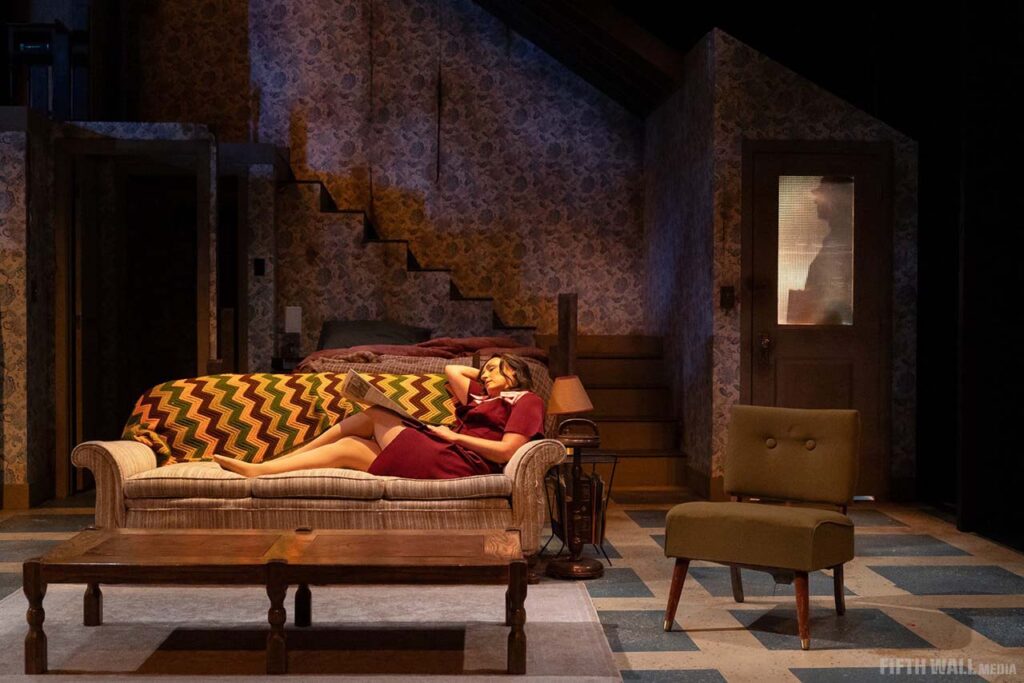
And that’s how our story begins. It is late at night. We meet a young woman. Alone. Trying to make her way home when she thinks maybe she heard something. Maybe she isn’t alone after all. And then out of the darkness the killer grabs his first victim, and her screams are quickly silenced.

Grace Fedorchuk, Photo by Fifth Wall Media

The following day we meet Ellen Bunting who works as a waitress and her out-of-work husband Bill Bunting who stays out late and spends too much time at the bar. Lauren Brotman plays Ellen with a world-weary sense of endurance and David Haysom plays her husband Bill who often seems on edge and struggles to control his temper.

Because Ellen’s the only one working there’s some tension and desperation in the air as the couple find themselves struggling to make ends meet and are at risk of defaulting on their mortgage. Ellen and Bill are living a life of forgotten dreams in a rather sad house in desperate need of repairs in a questionable district of town. And now there appears to be a killer on the loose.

Fortunately, they have an extra room available to rent and while Bill is off trying to pick up a few extra bucks doing some day labour a well-educated posh English gentleman, by the name of Laurence Moore, who happens to be a sociologist, shows up at Ellen and Bill’s door looking for lodging.

Lauren Brotman, David Haysom, Photo by Fifth Wall Media

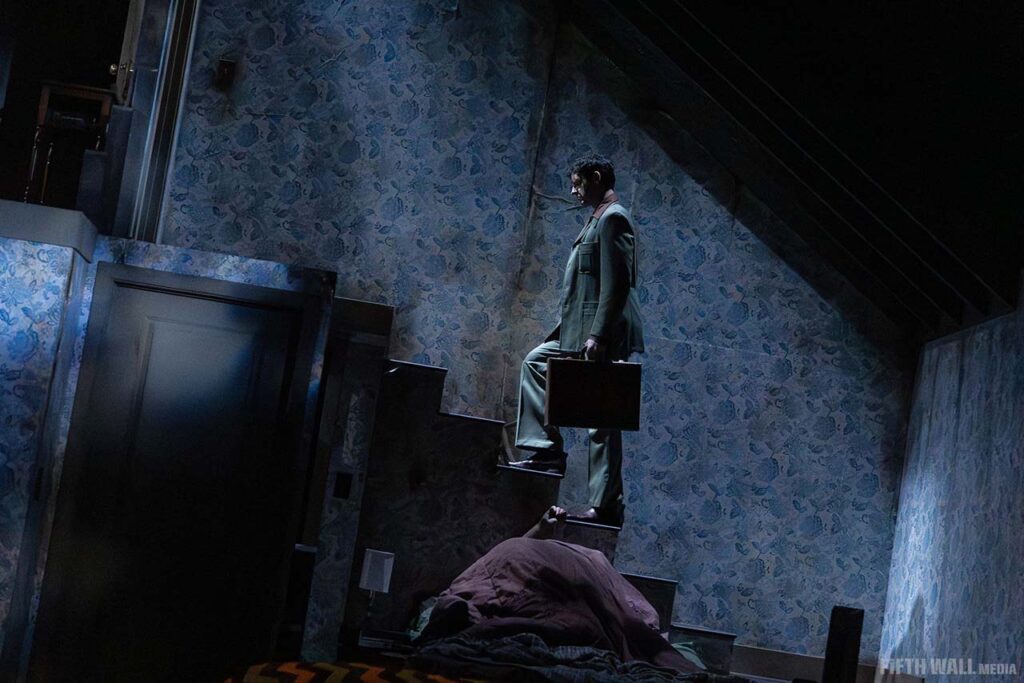
Tyrell Crews using his best British charm plays the mysterious stranger who is looking for a place where he can work undisturbed and do his research. When Laurence offers to pay for two weeks up front, the money and his friendly manner result in Ellen having no serious qualms about him staying in their home. Bill on the other hand doesn’t much like the guy and feels a need to assert his dominance to which the lodger initially defuses the situation by being completely agreeable and nonthreatening.

As was the case with Jack the Ripper, the murders in this story happen quickly and close together. Fortunately, one of Ellen’s friends is a police officer. Norma Lewis plays Joannie Buffie as a competent and determined woman who, having recently completed her police training, is now trying to do her job while dealing with the harassment and discrimination of the male officers in the force.

This is the 70s after all. And I remember there still being debates about whether or not women should work or stay at home and raise children. Needless to say, this argument never really applied to the poor because they had to work. They had no choice. But the choice of work was limited. So, while Joannie battles the chauvinism in her workplace, she is able to provide Ellen with more information about the investigation and efforts to capture the killer.

Norma Lewis, Lauren Brotman, Photo by Fifth Wall Media

Grace Fedorchuk, besides playing the young victims of our killer, brings a youthful optimism to her portrayal of Daisy Bunting who is Bill’s little sister. Daisy is coming for a visit so she can check out the university. She has bigger dreams and she’s got the student loans and determination to make a better life for herself.

Unfortunately for Daisy, she has the exact appearance of the killer’s previous victims and that makes her a possible target. Of course, as the body count rises suspicions are raised as to who our killer might be. Is it the lodger or could it be the husband? Or is something else going on?

Grace Fedorchuck, Lauren Brotman, Photo by Fifth Wall Media

Director Jack Grinhaus keeps the play moving and the tension rising while bringing together a terrific design team including set designer Scott Reid, costume designer John Iglesias, lighting designer Narda McCarroll, and sound designer and composer MJ Dandeneau.

Reid’s set covers two stories and looks and feels like the well-lived-in and run-down home it’s meant to be. The lighting adds to the mystery by jumping from the dead of night to hinting at secret lives by focusing on a particular character and their location in the home. The costumes fit the time and suit the characters and look well-lived-in while the music does a wonderful job of building tension and highlighting key moments.

David Haysom, Tyrell Crews, Lauren Brotman, Photo by Fifth Wall Media

I sat down with Lauren Brotman to talk with her about why the story remains relevant, how she helps to create a feeling of suspense and danger on stage, and what she feels is the significance of setting the story in the 70s.

JAMES HUTCHISON

The play is based on the 1913 book, The Lodger by Marie Belloc Lowndes which has been adapted several times into feature films. And now here we are more than a hundred years later and we now have the story on stage here at Vertigo. Why do you think this story keeps getting retold?

LAUREN BROTMAN

Because it’s relevant to every generation and I think obviously, sadly, that women being hunted is something that happens in life and it’s a very scary thing. And so, you know, it makes for good genre-based storytelling because it is scary and we can be considered prey. And it’s always been that way. So, that’s the reality. And I think when there is a serial killer it makes people feel like this could happen to me and so it starts to affect us and people do pay more attention when things affect them.

Tyrell Crews, Lauren Brotman, Photo by Fifth Wall Media

JAMES

I’m curious about the environment you inhabit on stage as an actor. In The Lodger we have a very realistic feeling and looking set. Which I love. I love a realistic set because it immediately pulls me into the reality of the story. But that’s not to say that a more abstract set doesn’t work. For example, the stage design and setting for A Killing at La Cucina used a very abstract and futuristic setting which fit the themes of that play and the world of that story. But I’m curious as an actor about how a realistic or abstract setting impacts your performance?

LAUREN

So, I would say that when the set is as realistic as it is here for you as an audience member and it pulls you in, as an actor, it kind of does the same thing. Everything shifts in my head because the world is there and I don’t have to imagine it. And the body changes because in real life, we’re not stiff. We move. We think. We’re responsive in real life to our environment and so that starts to happen to me as well on stage.

In a more stylized set, it’s really interesting to see the difference because in a realistic set, there’s tons of props, tons of things that create the world because any room needs to have those things in it to feel real. And then those things can help you find beautiful moments. But they can also be technically very demanding at the same time.

But in a stylized set everything is stripped away. It’s almost like a dance set and a dance world in some ways where it’s the body in space and the body’s relationship with light and sound. Not that those things aren’t true as well in a realistic set, but they feel more deliberate in a stylized set. Everything you do is heightened. So, moving your arm in a stylized set can tell a different story and so you have to be really conscious of every single moment that you’re moving and all those things become really precise.

JAMES

That’s interesting because I think with a more abstract set things land differently for the individual audience members. In an abstract set things can be interpreted in different ways but in a realistic set it’s the door or the fridge and it’s grounded.

LAUREN

And it’s familiar. People like what’s familiar. Visually, there’s quite a bit to focus on in stylized sets. It just hits you differently. The visual hits you differently. Whereas I think the emotion hits you harder in a more realistic play. But sometimes I’ve left a show that is more stylized and I didn’t know how I felt about it. But then three weeks or a month later it’s still with me. And those images are so clear, those characters. So sometimes it just takes longer for it to penetrate us because it’s not as personal or familiar.

Norma Lewis, Photo by Fifth Wall Media.

JAMES

What do you think is the importance of setting the play in the 70s?

LAUREN

Well, there were things happening at that time. There were serial killers like Ted Bundy. And it was a time when women in general were pushing back against having to be subservient and not being able to feel empowered in life in general. And everything about the 70s was about women being able to experience equality and being treated as human beings, really. And I think there was a big push at that time to reject the notion that we are prey and to fight back against that in some ways.

JAMES

I’m curious to know using The Lodger and your performance as an example, what are the tools you use as an actor to generate a feeling of suspense and danger for the audience watching the story unfold?

LAUREN

One of them is the pace of the play. Jack is a huge tension director. He loves tension. So, if we did the same play as a drama and not at Vertigo then you could give some breath and space to the hurt and wounds that the character might be feeling and take a moment. But in this play, you can’t sit too long in those moments because it drops the tension.

And for me, I’m running a marathon in this play where a lot is happening. And I found that by having an audible breath, not just for myself, but for the audience really helped keep something happening energetically and that breath means I’m connected to the audience in that moment of tension.

And in any play, I always want to know my overall need. What is the thing I’m trying to get to. And then I clock each scene. Am I far away from that need or close to that need because it helps me temper where I am emotionally.

But the thing we started to clock in this play was Ellen’s sleep deprivation which was separate from her need. She isn’t sleeping anymore. She wakes up in the middle of the night. She’s scared. And when you haven’t slept anxiety creeps in and things become way more heightened and at times, she’s almost hysterical and more paranoid and everything is just more reactive.

Lauren Brotman, Tyrell Crews, Photo by Fifth Wall Media

JAMES

Tell me a little bit about the cast you’re working with and what that’s been like.

LAUREN

Oh, we’ve had such a great time. I just love everybody and everybody’s really supportive of each other. I’ve worked with David before and we’re just so open with each other we can do anything. And Norma and I have this sisterhood because we did Mary Stuart together at Sage Theatre last year and that was like we moved together. So, we have a kind of natural stage bond. And Grace, because she’s young, is always fun and brings a really fresh energy with her. And Ty and I have worked together on a show like this one before but he’s supportive and we’re able to check in with each other, sometimes for safety because we’re dealing with knives and things, but also just because there is tension between these characters and to make sure that it’s not hitting us outside of the space. And I mean, generally, the whole team, our assistant director, stage manager, everyone has just been golden and so open-hearted. And we’re having a great time together, which is wonderful.

JAMES

Okay, well, talking about having a great time, why should audiences come see the show?

LAUREN

Well, last night we had this amazing student audience who showed us why, because they voice all the things that adults keep inside. I would say it is scary at times. Human at times. I think it’s a thrilling, very fast-paced journey for the audience. They’re going to be on the edge of their seats and they’re going to see people that they really identify with. So, I would highly recommend this gorgeous production. It’s a joy to be in and I think it’s been a joy for the audience to watch.


Vertigo Theatre’s 50th season is offering us a rich and exciting season of plays including world premieres, comedies, and mysteries. Their first production of the season, The Lodger, is a chilling psychological thriller that explores how fear and paranoia can make us panic and suspect the people closest to us.

You can catch The Lodger at Vertigo Theatre until October 25th. Tickets are available online at VertigoTheatre.com or by calling the box office at 403.221.3708.


THE LODGER

By Susie Moloney & Vern Thiessen
Based on the novel by Marie Belloc Lowndes.
And inspired by Alfred Hitchcock’s 1927 film.

Directed by Jack Grinhaus
Set Design by Scott Reid
Costume Design by John Iglesias
Lighting Design by Narda McCarroll
Sound Design & Composition by MJ Dandeneau

Production Photos by Fifth Wall Media

Published: October 9th, 2026 – Holocene Date: October 9th, 12,026


Elvis is Dead - Title Card

Dear Johnny Deere at Rosebud Theatre – Interview with Devon Brayne

Dear Johnny Dear at Rosebud Theatre Production Still
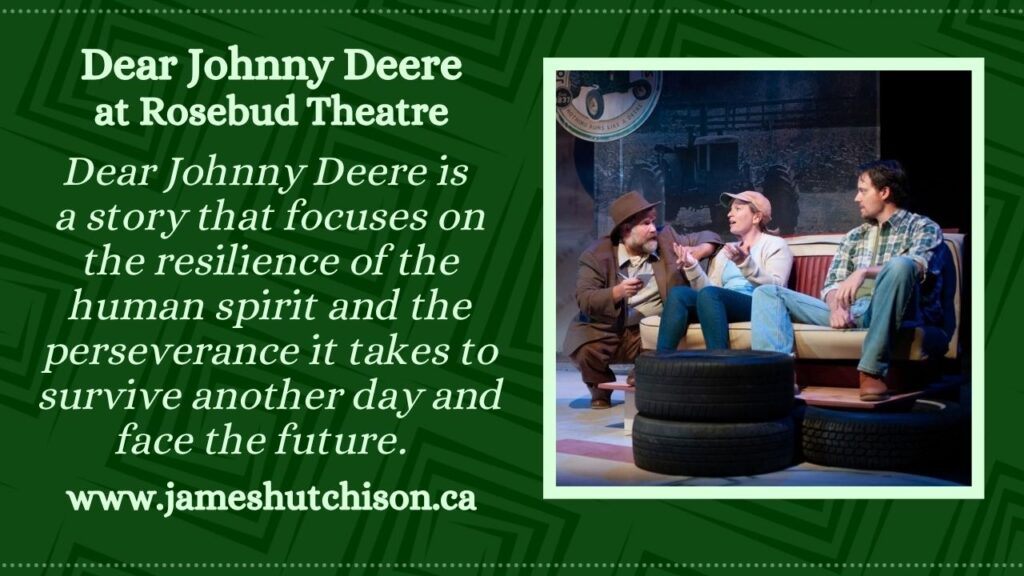
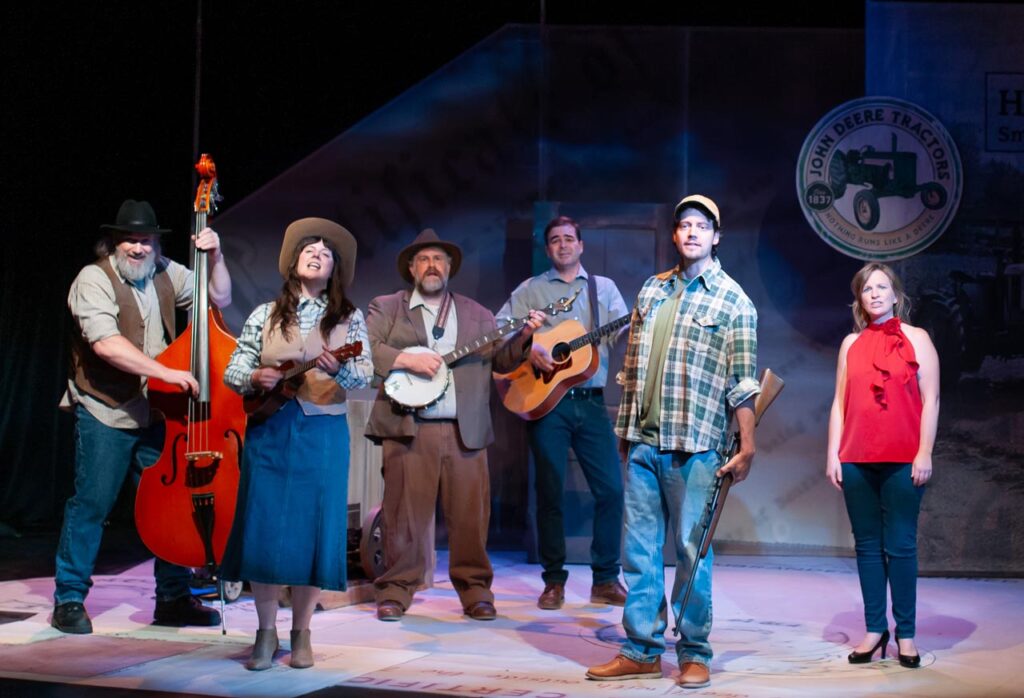
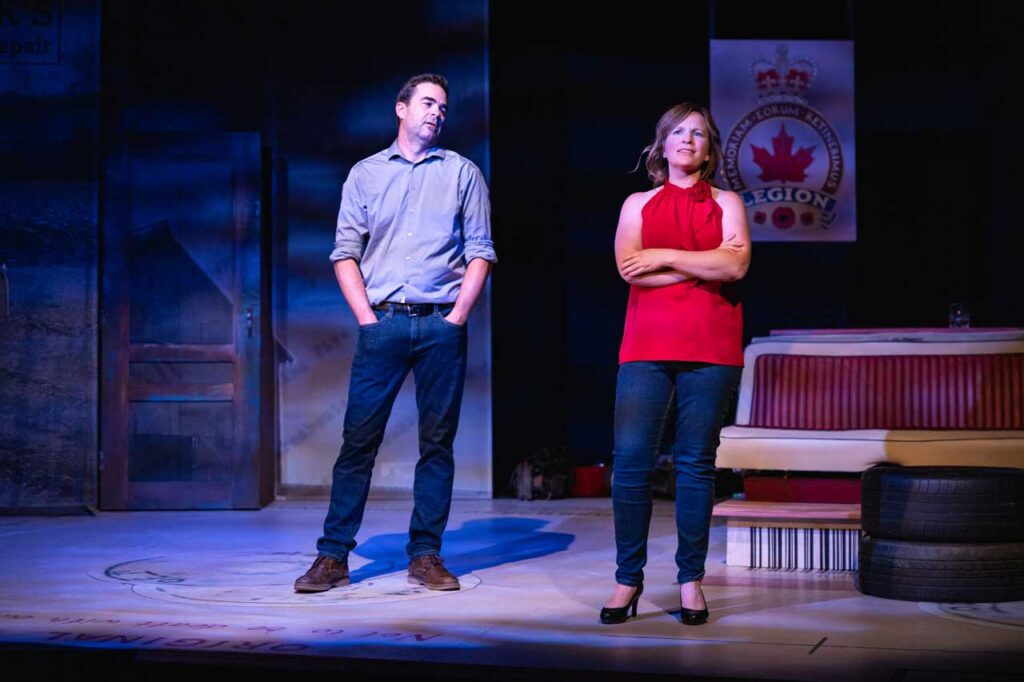
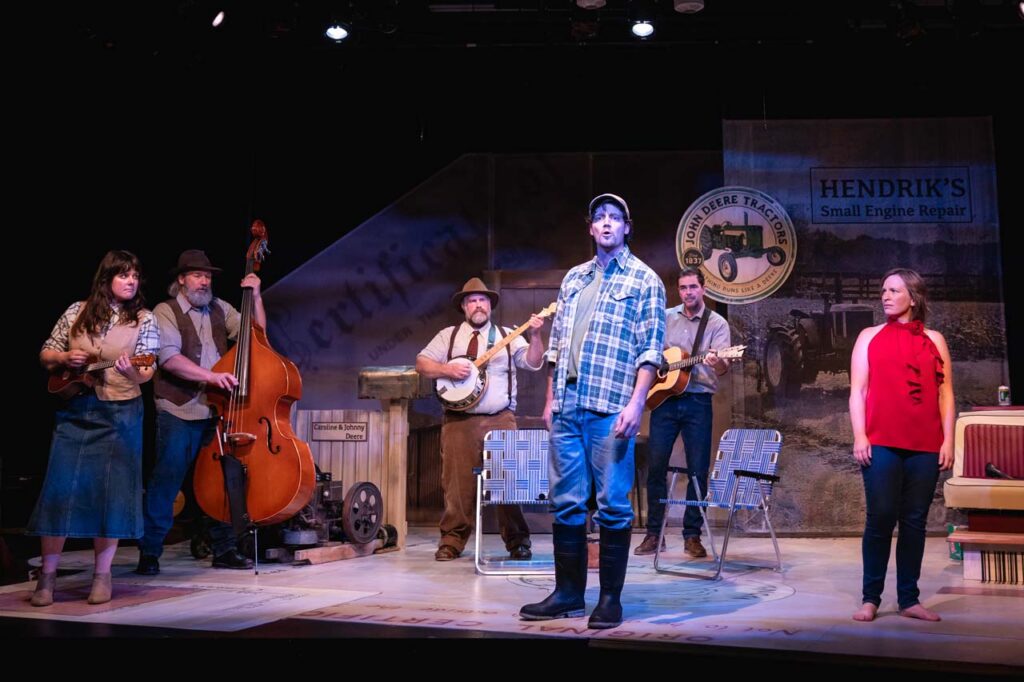
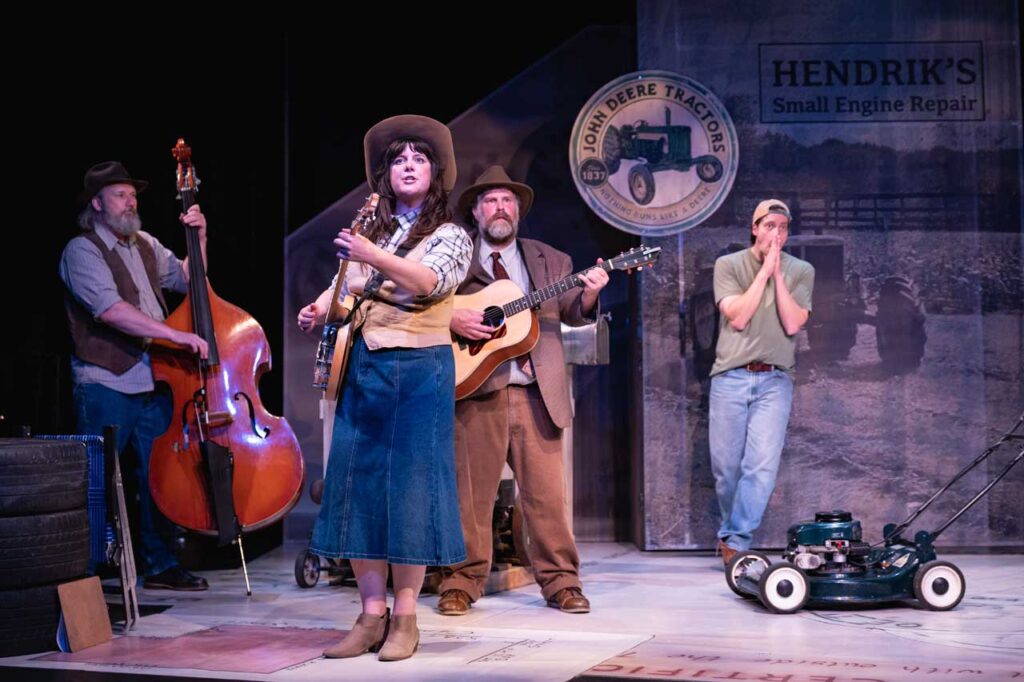
Chris Pompetti, Alixandra Cowman, Andrew Legg, Aaron Krogman, Devon Brayne, and Cassia Schmidt in the Rosebud Theatre production of Dear Johnny Deere. Photo Morris Ertman.

As the year slips into autumn and the combines are out harvesting the wheat and barley and oats you can jump in the family car and head on out to Rosebud Theatre for a familiar tale about a tractor, a boy and a girl, and the troubles, hopes, and turmoil of a faltering marriage and the challenges of farming the land. Rosebud Theatre presents Dear Johnny Deere by Ken Cameron based on the music and lyrics of Fred Eaglesmith with additional music by David Archibald.

***

Dear Johnny Deere runs until October 24th. Tickets are available by calling the box office at 1-800-267-7553 or online at www.rosebudtheatre.com. Matinees run Wednesday to Saturday with the buffet running from 11:00 am to 1:00 pm and the show starting at 1:30 pm. Evening shows run Friday and Saturday with the buffet running from 5:00 pm to 7:00 pm and the show starting at 7:30 pm. You can purchase tickets for the buffet and the show or just for the show itself.

***

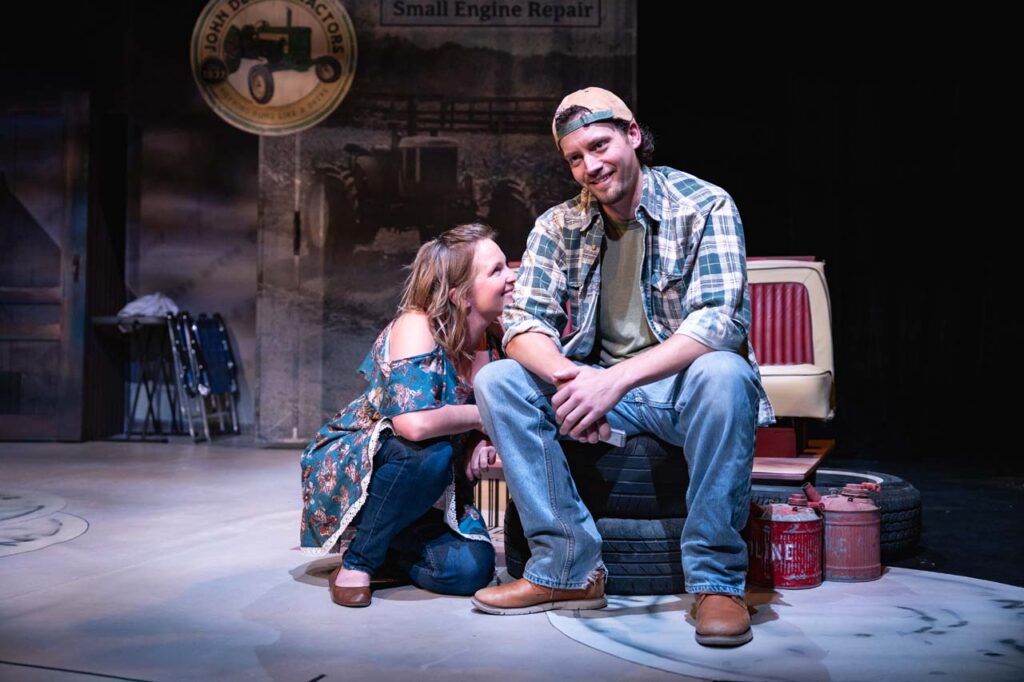
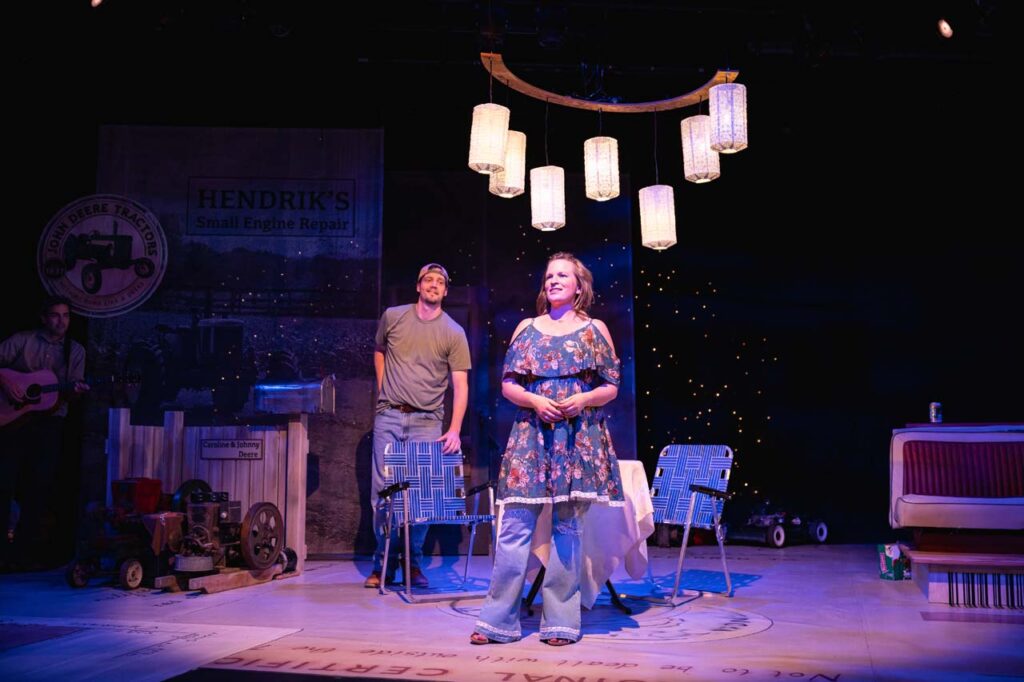
Dear Johnny Deere is an entertaining two hours of live musical storytelling with an extremely talented and versatile group of actors and musicians. Devon Brayne as Johnny and Cassia Schmidt as Caroline are the focus of our tale. They got married young and now many years later both are feeling a sense of deep dissatisfaction about how their lives have turned out and the direction their lives are going.

Cassia Schmitt and Devon Brayne in the Rosebud Theatre production of Dear Johnny Deere. Lauren Hamm Photography.

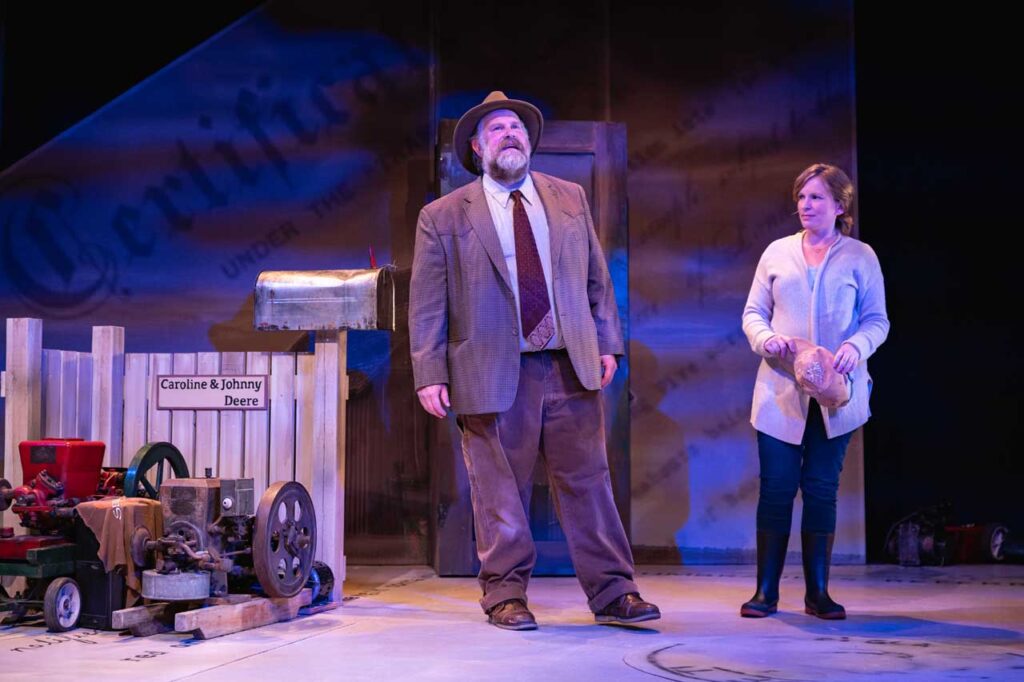
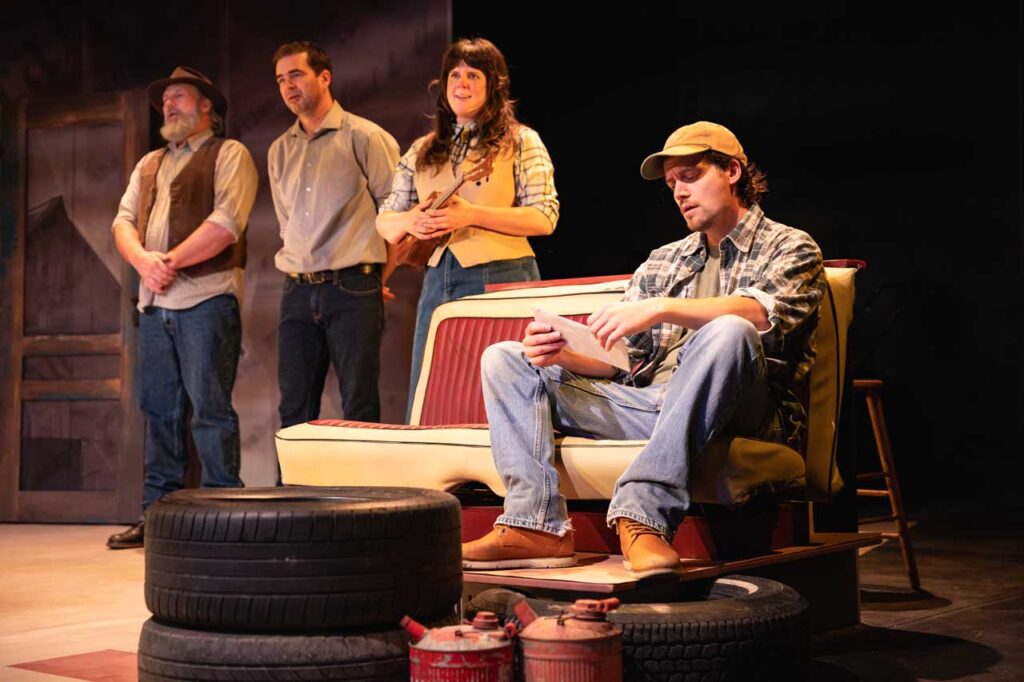
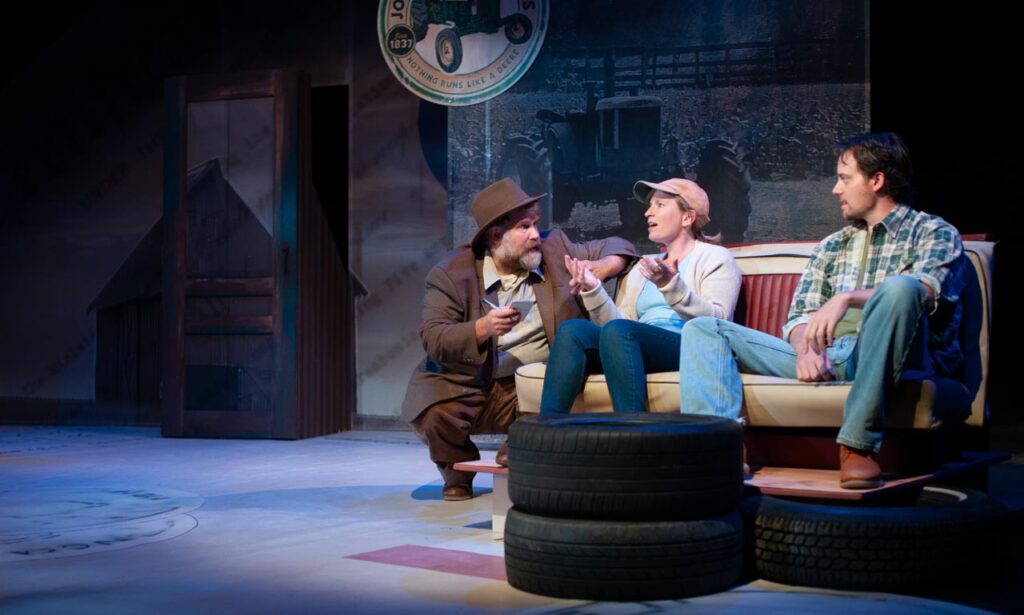
Andrew Legg plays their neighbour McAllister who runs The Local Paper. He’s also the narrator of the story and is a bit of a guardian angel who’s always trying to watch over and help Johnny and Caroline as the story progresses. There is some mystery to McAllister’s background involving his brother but that’s apparently a story for another time we’re told.  

Dear Johnny Dear at Rosebud Theatre Production Still
Andrew Legg and Cassia Schmidt in the Rosebud Theatre production of Dear Johnny Deere. Lauren Hamm Photography.

Aaron Krogman plays Mike who turns up in town and not only threatens Johnny and Caroline’s marriage but he’s scheming to take advantage of Caroline and Johnny’s stressed financial situation and buy the farm. Mike is no stranger to the town having grown up and gone to high school with Caroline and now he has returned to his small-town roots ahead of the province’s plans to build a highway and bypass the local community.

Dear Johnny Dear at Rosebud Theatre Production Still
Aaron Krogman and Cassia Schmidt in the Rosebud Theatre production of Dear Johnny Deere. Lauren Hamm Photography.

Alixandra Cowman steps in where needed as auctioneer and along with Chris Pompetti rounds out the cast and musical ensemble that help bring the story to life. The story is expertly designed and directed by Morris Ertman, the former Artistic Director of Rosebud Theatre, who returns to direct and design what I hope will be many more Main Stage productions.

Dear Johnny Dear at Rosebud Theatre Production Still
Chris Pompetti, Aaron Krogman, Alixandra Cowman, and Devon Brayne in the Rosebud Theatre production of Dear Johnny Deere. Lauren Hamm Photography.

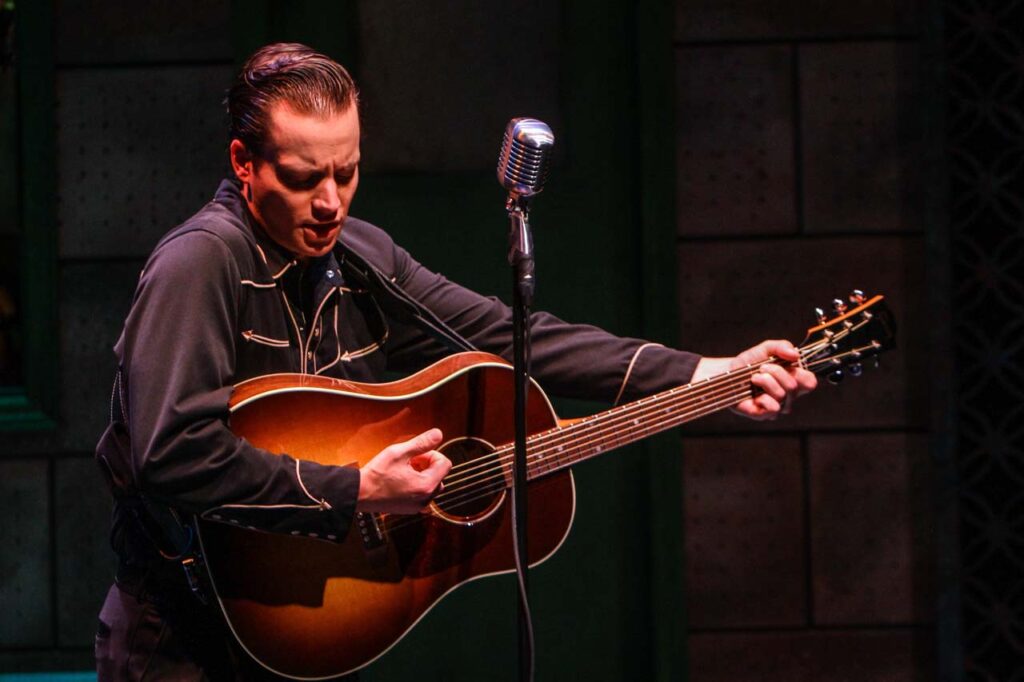
Devon Brayne is returning to Rosebud Theatre after his show An Evening with Johnny Cash packed the Opera House in the spring. Devon has an impressive list of credits including Million Dollar Quartet with Theatre Calgary, Forever Plaid with Stage West, and Jersey Boys at The Citadel. I sat down with Devon to talk with him about working in Rosebud as well as his thoughts about Dear Johnny Deere and discovering the music of Fred Eaglesmith.

Devon Brayne

JAMES HUTCHISON

You’ve got an amazing cast you’re working with on Dear Johnny Deere, including Cassia Schmidt, who plays your wife Caroline. And I’m wondering what it’s been like working with Cassia and the rest of the cast to bring this show to the stage.

DEVON BRAYNE

It’s been a true pleasure. I was pretty foreign to the Rosebud community prior to this production, but back in March I brought one of my Johnny Cash tribute shows to Rosebud and that opened some doors for me. Put me in the right room with the right people.

And Cassia is a tour de force. She’s obviously well respected in the Rosebud community and a veteran amongst the company having worked there for many years. Much can be said the same as for Aaron Krogman, who plays Mike Schmidt and Johnny’s father Hendrik. Again, just a very valuable player in the community of Rosebud and I think it’s a blessing for me to be able to work with so many talented people.

Alixandra Cowman, Chris Pompetti, Andrew Legg, Devon Brayne, Aaron Krogman, and Cassia Schmidt in the Rosebud Theatre production of Dear Johnny Deere. Lauren Hamm Photography.

JAMES

You said you were in the room with the right people. How much of your career do you think has been the result of being in the right place at the right time? How much has luck played?

DEVON

I don’t know. It’s different for everyone. But I do owe a lot of people a lot of gratitude. I’ve had many blessings with many different people who have put me in the right room with the right people to kind of give me my next jump start.

Back in 2018 was my first time performing Johnny Cash down in Lethbridge, my hometown, and that production connected me with a person who got me a different, completely unrelated production that wasn’t Johnny Cash at all. And that opened the next door and now here we are almost a decade later still kind of doing the same thing. And I shouldn’t say it’s all luck. My wife Jocelyn would fight against me for selling myself short. Obviously, having talent helps. Selling yourself in the room and being approachable and doing your best to provide a good experience and a good atmosphere for the people that you’re working with obviously goes a long way.

Devon Brayne as Johnny Cash

JAMES

Dear Johnny Deere is a story about a troubled marriage, a farm on the brink of being lost as well as the trauma of living with grief and tragedy and yet the show never feels like it gives into despair. So, it feels like there’s a core message of perseverance and hope. How does Fred Eaglesmith’s music and Ken Cameron’s crafting of that music into a story create that impression and feeling?

DEVON

I was having this discussion with our brilliant director, Morris Ertman, and this show is unlike any other jukebox musical. A jukebox musical by definition is when you’re using existing songs from artists and throwing those over an overarching tale to kind of facilitate that music. This kind of naturally feels opposite. Ken derived and pulled this story from the poetry of Fred Eaglesmith’s music.

One of the musical through lines that we have in this show is Yellow Barley Straw, one of Fred’s brilliant little folk ensemble a capella tunes. And there’s a line in there that says he just keeps on believing. And so, it speaks heavily to farmers and the culture of agriculture. Farmers persevere. They are dealt sometimes a pretty rough hand from year to year, and you never necessarily know what the year is going to bring. It could be a prosperous one or a devastating one. And Yellow Barley Straw, which we pepper in a handful of times throughout the show is truly just that mantra of come what may, we will persevere.

Chris Pompetti, Alixandra Cowman, Andrew Legg, and Devon Brayne in the Rosebud Theatre production of Dear Johnny Deere. Lauren Hamm Photography.

JAMES

What is it that keeps your character persevering?

DEVON

It’s a challenging one because a lot of the time one of the things Johnny Deere grapples with is self-confidence. He tends to feel very small and for the last fifteen to twenty years he’s suffering in silence. He doesn’t communicate. He’s very introverted and introspective and doesn’t like to communicate with his wife or with his other interpersonal relationships. But over the course of the show, he discovers his support systems and the people that he has in his life who do genuinely care and love him. He has people in his corner. He doesn’t have to go through this alone and he learns it’s okay to be vulnerable. It’s okay to express yourself. It’s highly important and pivotal to communicate with your partner. So, it’s a real gritty, meaty, authentic, true telling of life in the prairies.

And I think Ken Cameron did a brilliant and beautiful job of changing the time frame to bring you on to Johnny’s side. Because if we just stayed in the present day, Johnny’s a rapscallion. And we need to endear him to the audience, and so, there’s some brilliant scenes that Ken has written and pulled from the lyrics of Fred’s songs that really show you the teddy bear under the gruff. And in a way, Johnny is the everyman. He has been ridden hard and put away wet, as I like to put it. He’s hard-edged, but he hasn’t always been that way. And so, through the show, we get to  jump back and forth in time to Johnny’s life before Caroline and with Caroline and so you get a sense of why Johnny is the way he is.

Dear Johnny Dear at Rosebud Theatre Production Still
Andrew Legg, Cassia Schmidt and Devon Brayne in the Rosebud Theatre production of Dear Johnny Deere. Photo Morris Ertman.

JAMES

So, why should people make the journey and come out to Rosebud Theatre and see Dear Johnny Deere?  What are you hoping audiences get out of the show?

DEVON

If you are unfamiliar with Fred Eaglesmith’s music ahead of time, you will leave a fan. That’s coming from someone who was unfamiliar with Fred Eaglesmith prior to attaching myself to the show. And now I greatly appreciate not only just the musicality, but the poetry and the meanings and sentiments that he has within it. And again, as I mentioned, Ken has really shaped and sculpted this show to highlight and showcase Fred’s poetry in that. I think it’s just a real honest show. It’s not a glitz and glam, jazz hands, chorus line, everyone down front kind of show. It is hard-hitting being both heartwarming and heart-wrenching at times, delightfully funny and often devastating. It kind of runs the gamut. You will laugh. You may cry. But you’ll leave warm and full.

Devon Brayne and Cassia Schmidt in the Rosebud Theatre production of Dear Johnny Deere. Lauren Hamm Photography.

Dear Johnny Deere is a story that focuses on the resilience of the human spirit and the perseverance it takes to survive another day and face the future. Yeah, life doesn’t always turn out like we hoped but that’s kind of par for the course. Who hasn’t had to resort to a Plan B or a Plan C? As for myself, I’m already up to plan V, which honestly just involves a lot of buying lottery tickets when the darkness of the future and the promise of millions overtakes my better judgement.  

Of course, rather than buying lottery tickets you could spend time with family and friends. That’s not based on luck. That’s based on choice. You can choose to head on out to Rosebud so you can enjoy a meal and go to the theatre and see Dear Johnny Deere. And I think that’s a good way to spend your time. Theatre lets us enjoy a glimpse into life while giving us an opportunity to make rich and rewarding memories with those beside us. And when we think back on our life we can cherish those moments where we connected with someone and shared the joy of being part of a community experience. And music I think more than anything connects us. It’s deep and primal and reaches us in ways that crosses generations and time.

Catch Dear Johnny Deere at Rosebud Theatre until October 24th. Tickets are available by calling the box office at 1-800-267-7553 or online at www.rosebudtheatre.com.

Rosebud Opera House in Rosebud Alberta, September 2026

Published: September 30th, 2026 – Holocene Date: September 30th, 12,026