Vertigo Theatre presents The Verdict by Margaret May Hobbs adapted from the book by Barry Reed. This is a thrilling courtroom drama and story of redemption that reminds us of just how satisfying and exhilarating live theatre can be. Tickets are available online at vertigotheatre.com or by calling the box office at 403.221.3708.
Have you ever found yourself staring in the mirror, late at night, drink in hand, contemplating what you’ve done with your life? Your failures. Your triumphs. Your regrets. Frank Galvin has. And Vertigo Theatre’s production of The Verdict lets us step into Frank’s world for an evening of soul-searching redemption.
The Verdict is one of my favourite movies by one of my favourite directors, Sidney Lumet. Lumet came from the theatre and liked to provide his actors with rehearsal time before shooting. And the result was always a more nuanced and more natural performance. You see in movies and on the stage, I think we’re really looking for human connection and empathy. We want to be seen, and we want to be heard. And the more natural a performance the easier it is for us to identify with the characters and the story. And that’s what director Jack Grinhaus along with his stellar cast has on offer for us as the final play of Vertigo’s 2025/26 season. A human story about connection and doing the right thing.
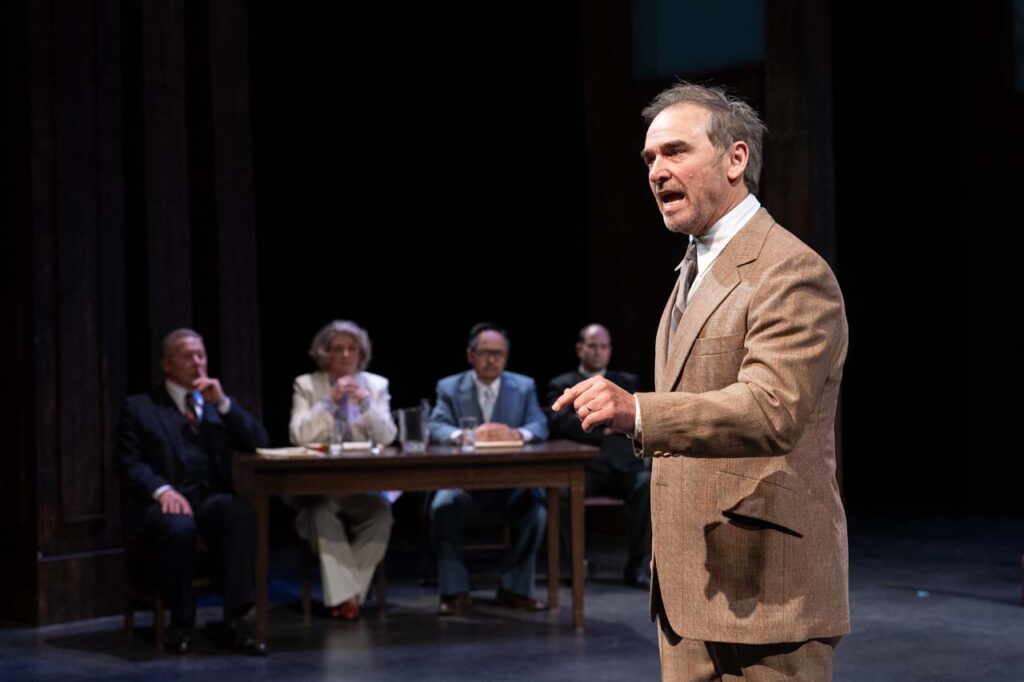
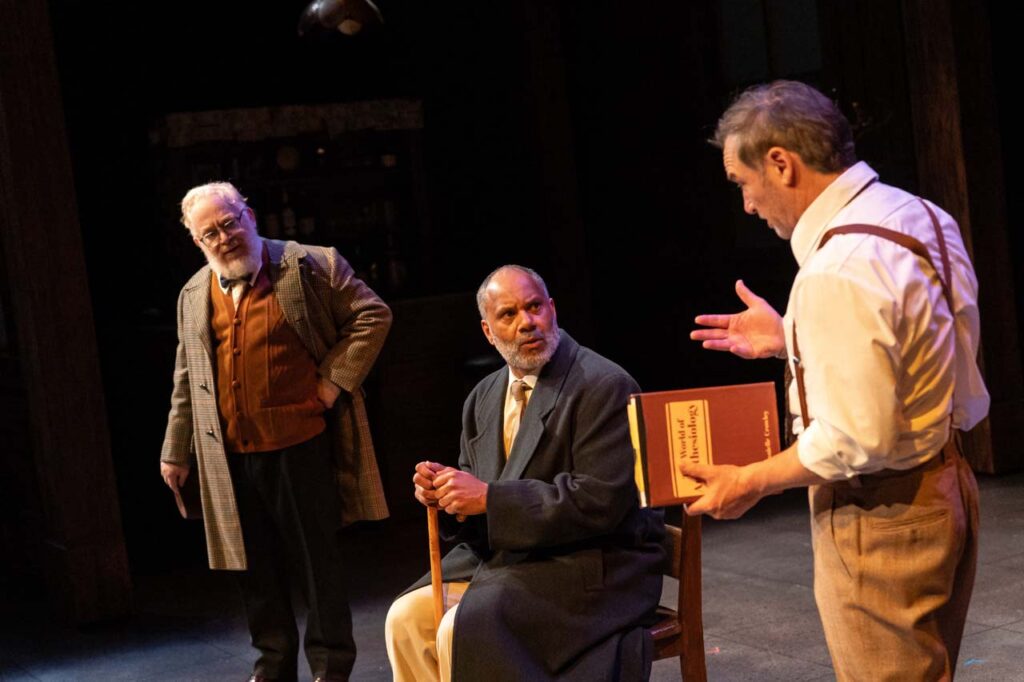
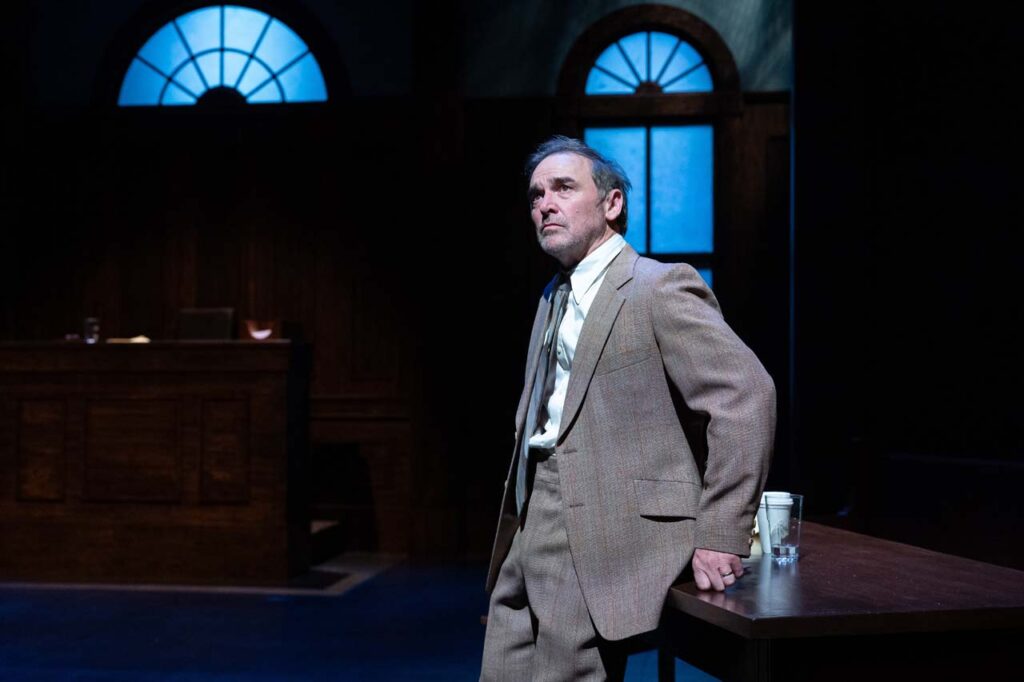
So, it’s the early ‘80s in Boston and Shaun Smyth gives a commanding and nuanced performance as Frank Galvin a one-time promising lawyer who starts his day by checking the obituaries so he can show up at funerals and offer his business card to the widow in case there’s a will or an insurance claim that could use his particular skills. He has fallen on hard times, faced disbarment, and spends his days numbing his pain with whiskey.
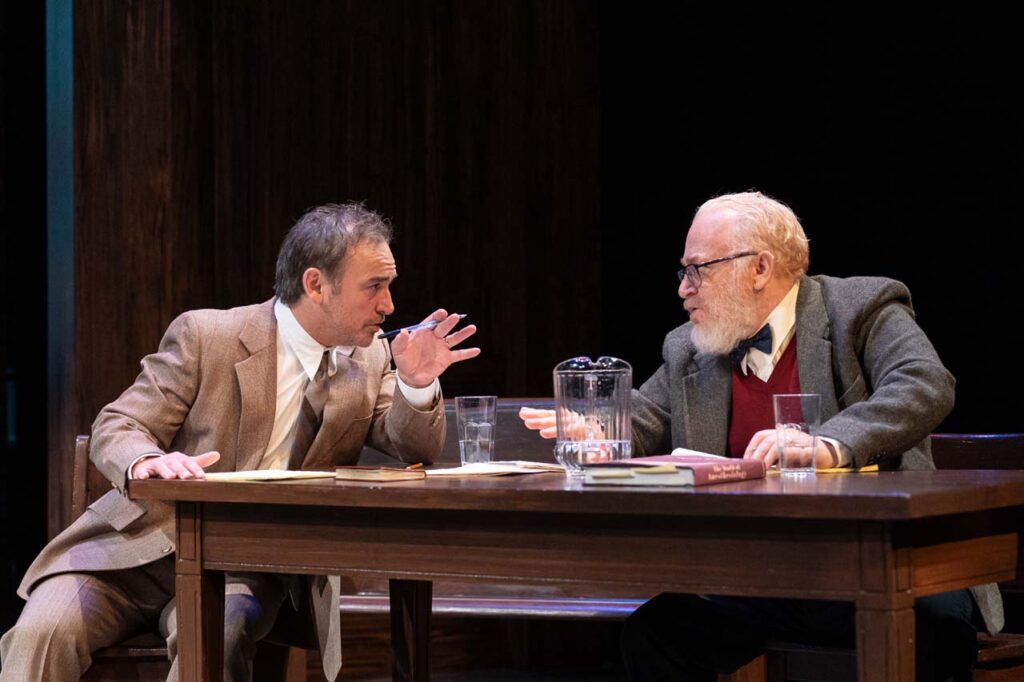
Frank is at a low point in his life, but he’s been thrown a lifeline. His battle-weary mentor Moe Katz played with plenty of comic insights by Dov Mickelson has gotten Frank a malpractice case that can easily be settled out of court and provide Frank with a big chunk of change. And Frank is grateful for the case. He’s grateful for the money.
But here’s the thing. Something terrible happened to Deborah Ann Kaye a young woman going to the hospital for the birth of her third child who ends up going into cardiac arrest while on the table. Her heart stops. Oxygen is no longer reaching her brain. A code blue is called and while the doctors fight against time to get her heart started again and deliver her child, in the end, she leaves that delivery room in a coma and four years later finds herself wasting away and lying in a dark room surrounded by monitors and pulleys and tubes that feed her and keep her diminishing body alive.
Frank represents Deborah’s mother Mrs. McDaid played with a heartbreaking sorrow by Shawna Burnett. They are suing the hospital, the archdiocese, and the two lead doctors, Dr. Danielle Crowley, played by Kira Bradley and Dr. Rexford Gilbert Towler, played by Steven Conde. Both doctors feel themselves above reproach and consider themselves to have done everything in their power when things went south to save both the baby and the mother. Frank assures Mrs. McDaid that this will all be settled without the ordeal of going to court. And that’s his intention. Until he goes to see Deborah in the hospital and that changes him.
Up until going to the hospital Deborah was just a name on an insurance form. This Deborah – the one lying in bed wasting away in front of him is a real person and a woman whose life was stolen from her. Frank realizes that her story must be told and that a quick settlement won’t be near enough to pay for her long-term care and her children’s future. And so, Frank refuses the settlement and decides to take the case to trial so that fair compensation can be given and justice will be served. But of course, there’s no guarantee that he’ll actually win the case, and that’s where the dramatic tension lies in the play.
By going to trial Frank is choosing to go up against J. Edgar Concannon played with a commanding sense of confidence by Joel Cochrane. Concannon not only represents one of the most powerful law firms in the state, but it is also claimed that he has never lost a case.
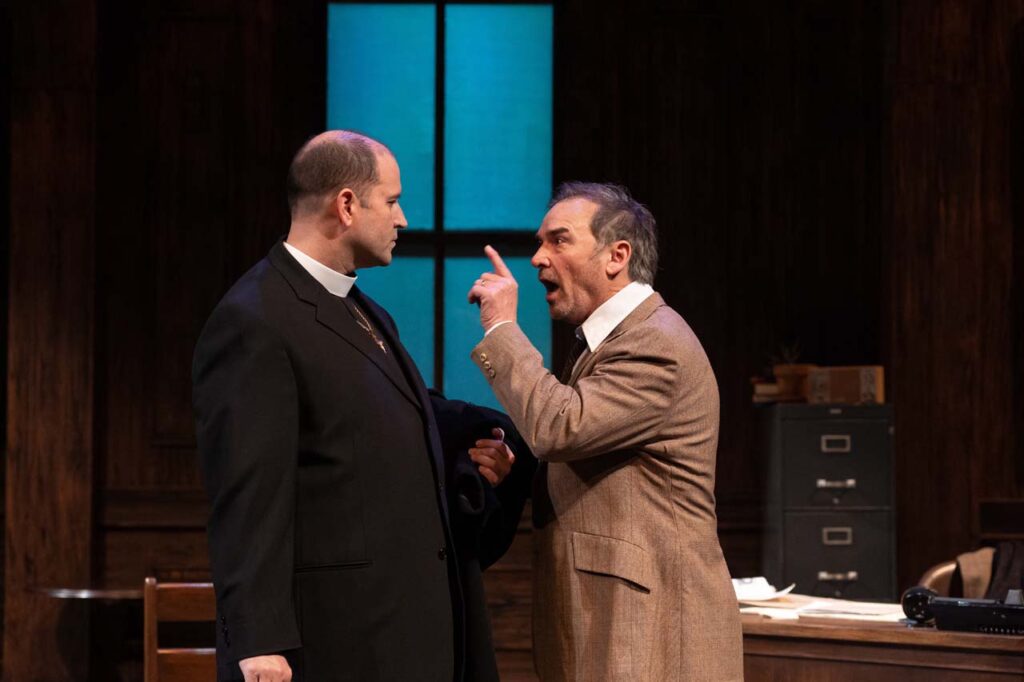
Into this mix we meet Steven Morton who portrays the troubled Bishop Brophy who urges Frank to take the deal because it’s the smart thing to do and the best thing for the church.
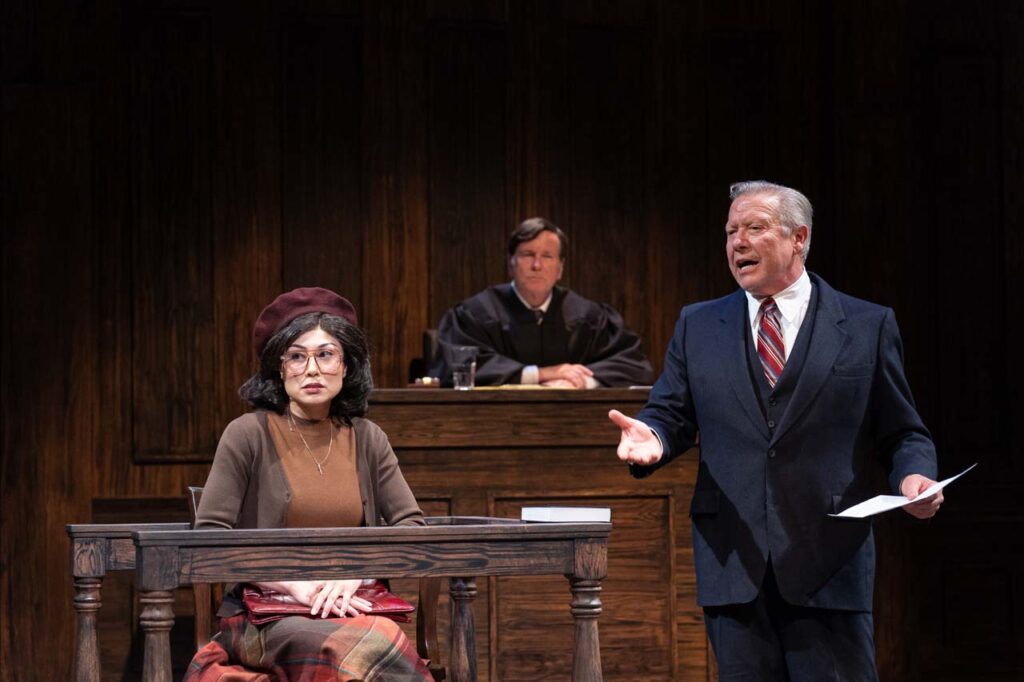
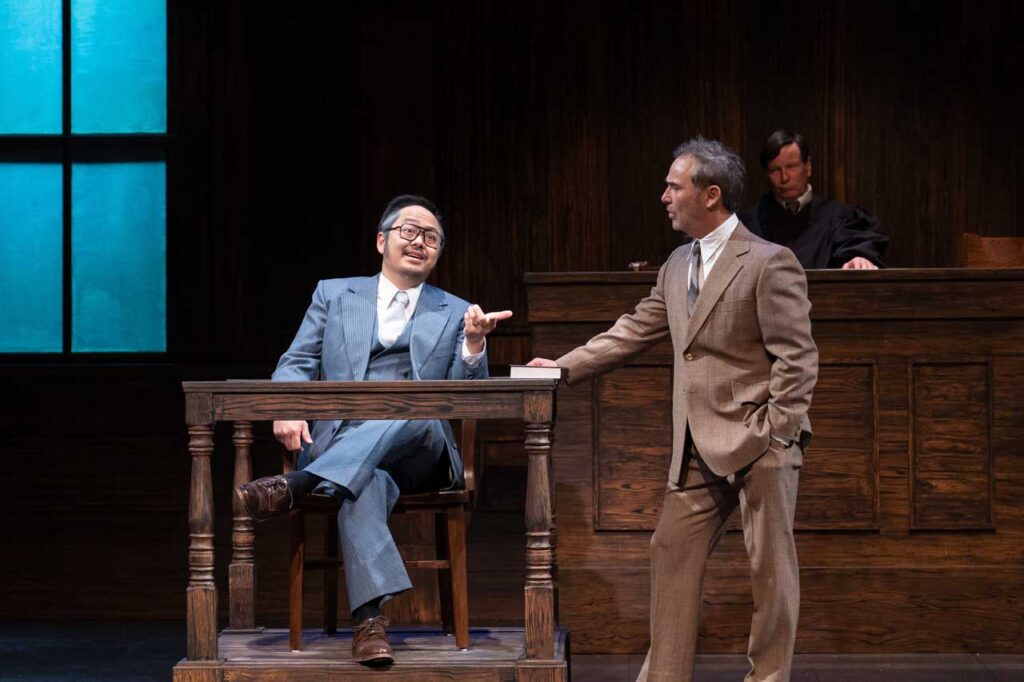
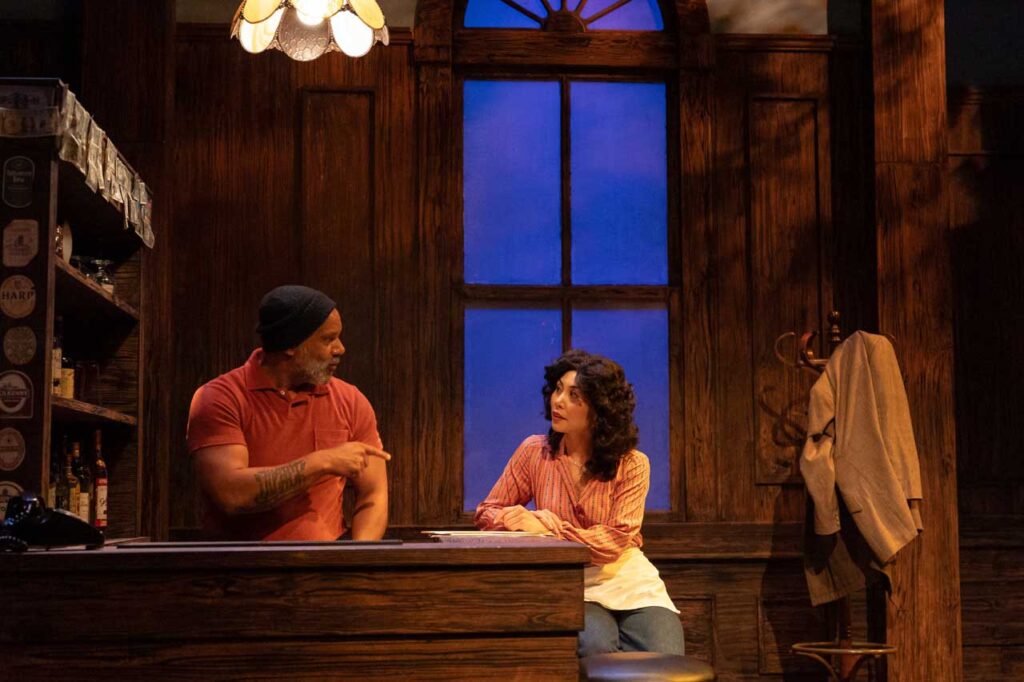
Doing double duty Christopher Clare plays Eugene Meehan the friendly bartender and owner of Frank’s favourite watering hole, as well as playing the unflappable Dr. Lional Thompson an expert witness that Frank flies in for the trial.
Kelsey Verzotti is Donna St. Laurent the charming and likeable waitress trying to get her own life back on track who works at the bar. Verzotti also portrays Natalie Stampanatto who was the nurse on duty the night that Deborah was admitted to the hospital.
And rounding out the cast is Duval Lang as irascible Judge Eldredge Sweeney who adds friction and tension to the legal proceedings.
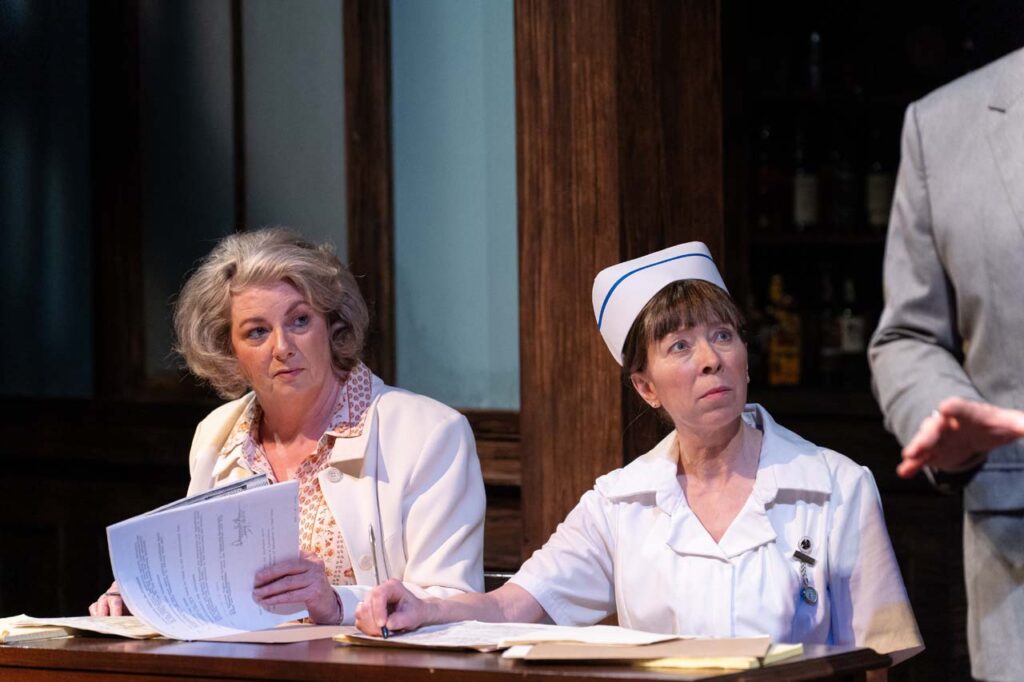
In addition to a great cast Jack Grinhaus has gathered together a terrific design team including set designer Narda McCarroll, costume designer Rebecca Toon, lighting designer Jessie Paynter, and sound designer and composer Miranda Martini to bring the world of the play alive.
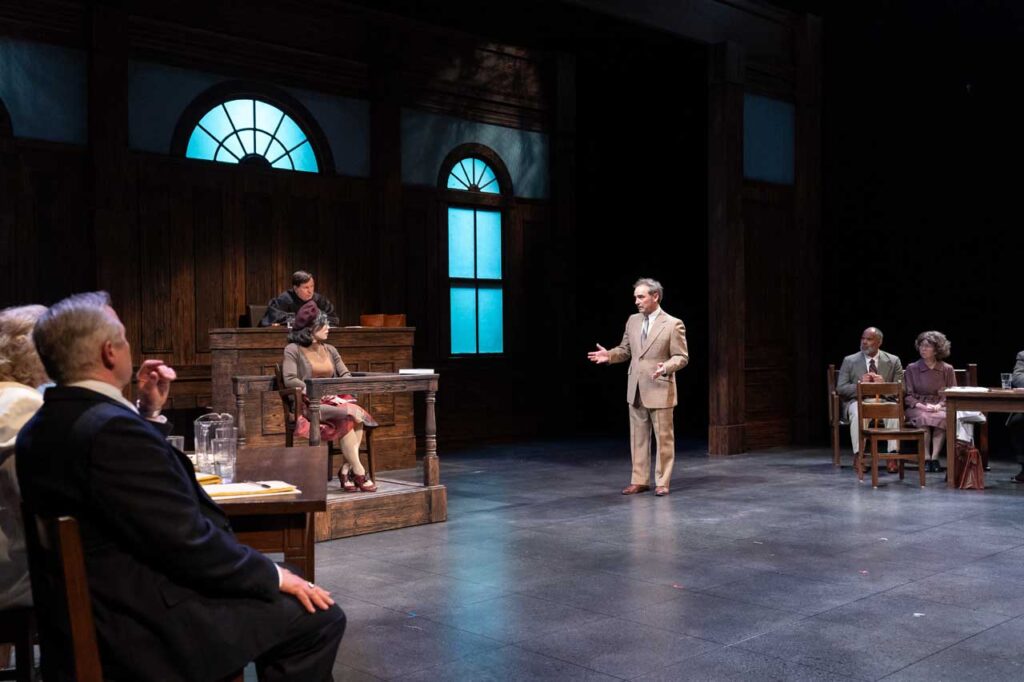
The sets are made spacious and kept simple with dark wood paneling providing us with a feeling of age and time. The movement of a desk or the retraction of a wall easily changes the setting and the play moves along at an uninterrupted pace.
One of the things that makes the play work so well is that the entire second act is the trial. In the first act we learn the story and we learn about Frank and all the other characters. But when we come back after intermission, we’re in the court room. And we as the audience are brought into the world of the play by becoming the jury. All the testimony and opening and closing arguments are directly delivered to us as we try to figure out who is telling the truth and who might be less than honest about the events of that day.
You know, I’ve been looking forward to seeing this stage adaptation ever since Jack announced it last year and I’m happy to say I was not disappointed. The Verdict delivers a remarkably satisfying and memorable night at the theatre that is driven by powerhouse performances from the entire cast.
In addition to seeing the show I also wanted to sit down with Jack and explore his thoughts about directing the play because he told me that this was a significant movie and book for him and I was curious to know about that personal connection.
JACK GRINHAUS
I grew up with a passion for stories and films about justice and injustice. I don’t know if that’s because one of my first memories is John Lennon’s assassination and it’s one of the first times I remember seeing my mother cry and it just impacted me. And those kinds of moments made me question humanity and to be curious about what justice means. You know the distance between what is true and what you can prove to be true.
And Sidney Lumet who directed the movie is one of my favourite film directors of all time. And it has Paul Newman and when you’re young you end up seeing more films than you do theatre because it’s more accessible. And besides that, it’s a really entertaining story about a guy who has one last shot to prove himself. And I think there’s a spectacle to courtroom dramas that lends itself perfectly to live theater that’s even better than film or TV.
And then, at the same time, it feels like we’re in a world today where I think a lot of people feel like there isn’t a lot of justice in the universe these days. And I wanted to offer our audience a place where you can come in and justice will be done. David can beat Goliath. So, it felt really relevant.
JAMES HUTCHISON
So, you’ve got this exciting courtroom drama, and I assume you must have had some visions or ideas about what you want to do with it. And now you’ve assembled the cast. You’ve got it on its legs, and I’m wondering, how has that cast brought your vision to life, or how has it maybe taken it in new directions?
JACK
Everybody came in really prepared. Most people right from the start were almost completely off book. You know, Sean Smyth, who plays Frank Galvin and is on stage almost all of the time and has huge swaths of text came in about 90% off book and so he led the charge and we started cooking really fast and really early.
And the play deals with characters who are a little older and so I’ve been able to assemble some of Calgary’s best and seasoned actors and put them in a room. We have ten people. And the majority of them are heavy-hitting professional artists in this town. And so, what they can bring to the table as mature actors who know how to make offers, as we say, is exciting.
So, as the director I don’t feel like I have to control the scenario. I can allow for a more organic creative process because they come in with really strong, exciting choices and challenge each other. All I have to do is go in and tweak it and make sure the tension is there and support them because a team like this brings so much to the table. And it’s a humble, fun, absolutely extraordinary group that has elevated the show from day one.
JAMES
You know, courtroom dramas have such a key moment or payoff. It’s the verdict. Guilty or not guilty. And that’s what makes these stories so gripping. But they only remain gripping if we feel the verdict could go either way. So how do you balance that in the play? How do you make a case for justice and yet balance the possibility that justice isn’t guaranteed?
JACK
The work I’m interested in has characters that have a certain level of moral ambiguity. I don’t necessarily believe in good guy vs bad guy. I think when those lines are blurred, audiences have more difficulty being able to take a side and even the people you would term the bad guys in this story – I’ve told the actors don’t play them as bad guys. They think what they did was right.
And the beauty of a courtroom drama is, it doesn’t matter who’s right or wrong, it’s what you can prove. So even if we all believe in what we know to be true in this story it doesn’t necessitate that people will win because we have to be convinced as a jury.
So, you learn everything in the first act and then in the second act we’re in the courtroom and I think Vertigo audiences love to chase a story. This isn’t as much a who done it or why done it or how done it, it’s more of a are they going to get caught and get what they deserve for what they did.
Because the court case swings back and forth. And I think that’s how you build tension. You have to focus on making sure that both sides feel like they’re winning that battle at some point. And so, I don’t think you totally know the outcome until the very end because you feel like everybody’s telling the truth. But in the back of your mind you know there’s something off. You don’t know what. And we have a great reveal in the play that helps take that over the edge.
JAMES
You know, one of the lines that I remember from the movie is when they’re talking about justice and Frank says, “No, the courtroom gives you a chance for justice. It’s not a guarantee of justice.” And that makes it a worthy thing to pursue.
JACK
Absolutely. That’s one of the first scenes. The case is built around this hospital that’s run by the church and the diocese. So, the bishop is speaking with Frank saying, “You know there’s nothing we can do in this scenario. All we can do is try to offer something to help,” And Frank says, “I can’t take it because then no one will ever know what happened. No one will know what went wrong.”
And in his eyes, it’s better for this to become a public event so that people will know the story whether or not they win or lose. And so that becomes the gamble he takes. He may not win it. He wants to win it. But the chance he’s taking is to make sure that the story is still out there because if you take the payoff – no one will ever know the story. And as they say, history repeats and the same problem can occur again.
JAMES
Yeah, it’s a very short play if he takes the payoff.
JACK
Yeah, I think so. We’re done in scene one if that happens, right?
JAMES
That’s right.
JACK
But we’re also meeting a man who is used to taking the payoff. As the play begins, we find out he’s fallen pretty hard from his glory days as a lawyer. He was very promising. And then, some things happened to him throughout his life that threw him into this place. And he’s given up. When the play begins, he’s calling up funeral homes early in the morning, seeing if anybody needs him to come by and meet some people. Maybe there was an accident, maybe there’s an insurance claim, maybe there’s a will. He’s at the bottom. He’s an ambulance chasing lawyer.
But then something about this case revives that great ancient soul in him that was a fighter and offers him a chance for justice and rejuvenation and retribution in his life. And we all wish we had those moments, you know, a chance to make things right. And that was the theme of this whole season. People reflecting on their lives to try to make right past wrongs. And I think for Frank there’s this moment in the play where he’s talking with his partner, Mo, and he just says, “This is the case.”
JAMES
So, you’ve announced your 50th season and you’ve got an outstanding lineup of plays ahead of us. Can you go over what we’re going to see next season?
JACK
Absolutely. You know, we had this huge fundraiser recently, and I wanted to do a historical perspective, so, I ended up doing this massive deep dive into the history of the company. I went back and read every Herald article from 1967 till today to see how things went from the Pleiades to Vertigo. The whole story. Every play.
And it was a massive undertaking and an incredible experience for me because I got to see how the lineage of this place actually was. And interestingly, there’s this idea that we are this Agatha Christie theatre, but in fact, I think we’re more of a crime theatre, if anything, which is why we started to branch out in those areas. And this season taking all that into account and looking up our history and trying to make sure that we’re looking ahead as much as looking behind I wanted to culminate all that 50 years in a way that was saying, “Okay, this is where we’ve come from. Here’s where we are today. Here’s where we’re going.” And do it all in five or six plays.
And you know, The Mousetrap would have been a great choice. Dial M for Murder would have been a great choice. Sheer Madness would have been a great choice. But all those shows were being done by other theaters in the city. So I went, okay, how do I stay exciting, original, fresh, and not feel like we’re repeating things that were recently done and looking forward so audiences can love Vertigo for what it is regardless of the stories.
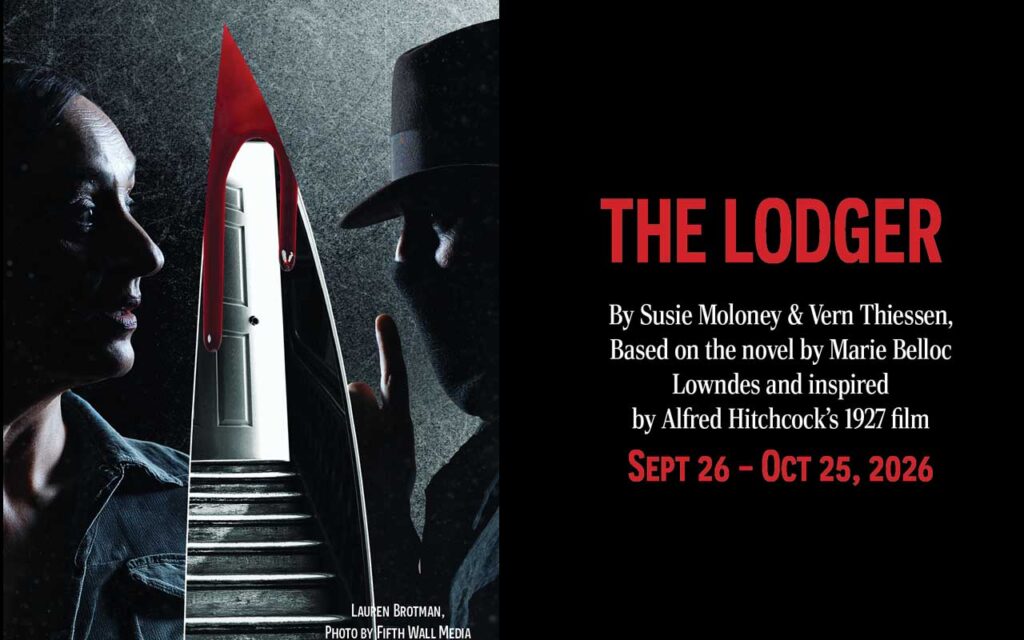
And so, we start off with the world premiere of The Lodger. And if we’re going to be Canada’s National Theatre for Mystery and Intrigue, then we have to lead as much as follow. And so we’re going to start off with a show from two incredible writers, Vern Thiessen, who’s one of Canada’s most prolific and profound playwrights, and Susie Maloney, who’s one of Canada’s great, renowned horror novelists, who have come up with this concept for a modern take on The Lodger, which initially was written as a response to the Jack the Ripper cases that takes place in that period. And even the Hitchcock film from 1927 is kind of reflecting that period 40 years before.
So now we’re thinking about 40 years before now and that’s the 70’s, which was the rise of the serial killer in the modern era. You know, the Ted Bundy’s and all that stuff. And so, setting this play in that period lets us reflect on that very scary period where everybody stopped hitchhiking.
And so, The Lodger is this incredible Hitchcockian suspense about a series of murders that are happening in a nondescript American-like city and suddenly this poor couple takes in a lodger who’s a bit mysterious and creepy. So, we’re not waiting for the big reveal of who the killer is as much as what do we do once we know, right?
And Hitchcock’s greatest weapon is suspense. He always says, it’s not suspenseful to say with two minutes left in a story that a bomb’s going to go off. Instead what you do is two minutes into the story say a bomb’s going to go off. And the suspense in this story is the fear of having somebody like that in your home.
The Lodger is a world premiere play that’s exciting, fast paced, and I’m directing that, and we already have an incredible team that we just cast, and I couldn’t be more proud of that. So, we’re starting with a sharp, suspense, that’s a little scary and exciting thriller.
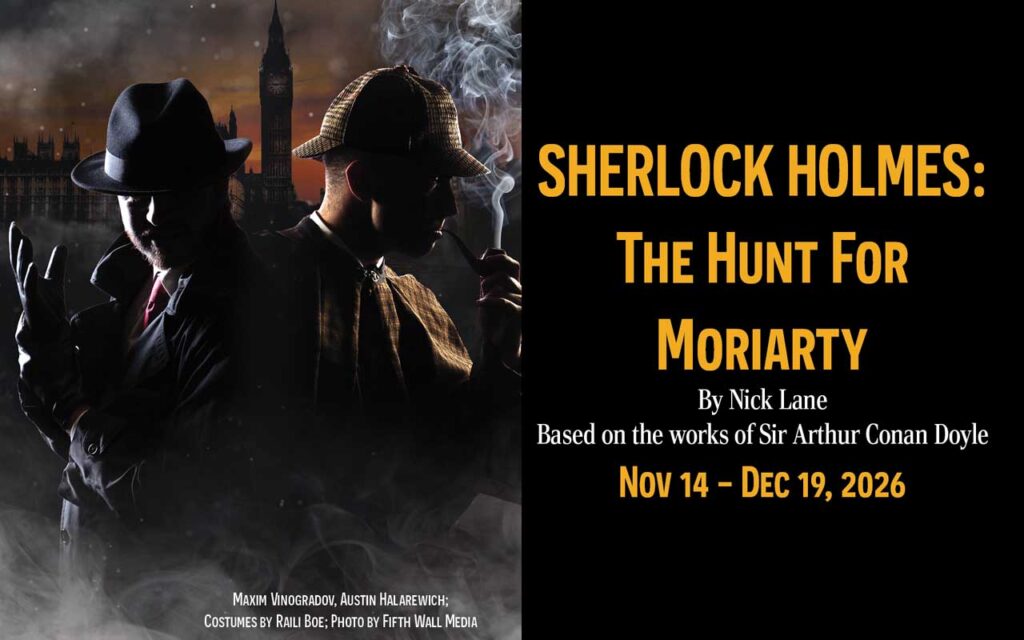
And then, we go to Sherlock Holmes: The Hunt for Moriarty. And this is a new play by Nick Lane, based on several stories from Arthur Conan Doyle. Nick Lane last brought us The Strange Case of Dr. Jekyll and Mr. Hyde, which was a huge hit. People really loved both his writing and storytelling nature. And this is almost like a political thriller. Sherlock Holmes, and his brother Mycroft, get caught up in it. And it’s Holmes and Watson against their greatest foe, Moriarty.
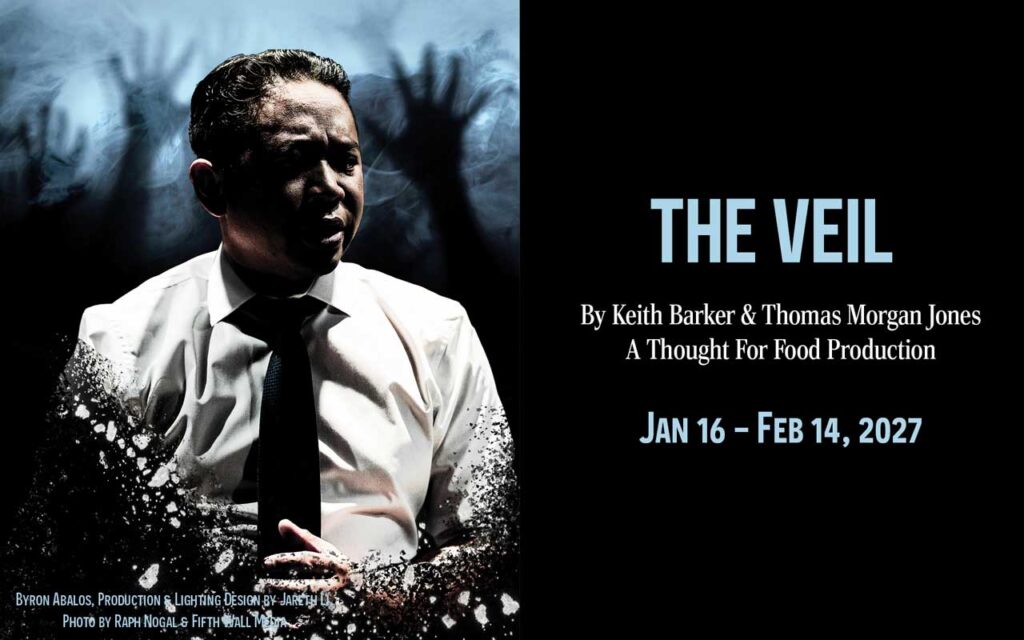
Then we go onto something new. Another Canadian piece. The Veil, by Keith Barker and Thomas Morgan Jones. An interesting moral laundry piece that’s very much Faustian in nature about a guy who makes a deal with the devil and then things start to go off the rails. And it’s a single actor coming in and telling this story to the audience. And the audience eventually gets implicated in a way and has to make choices of their own. It’s a fast-paced, heart-pumping, little chiller piece about a guy who picks up a curse, and how is he going to relieve himself of it?
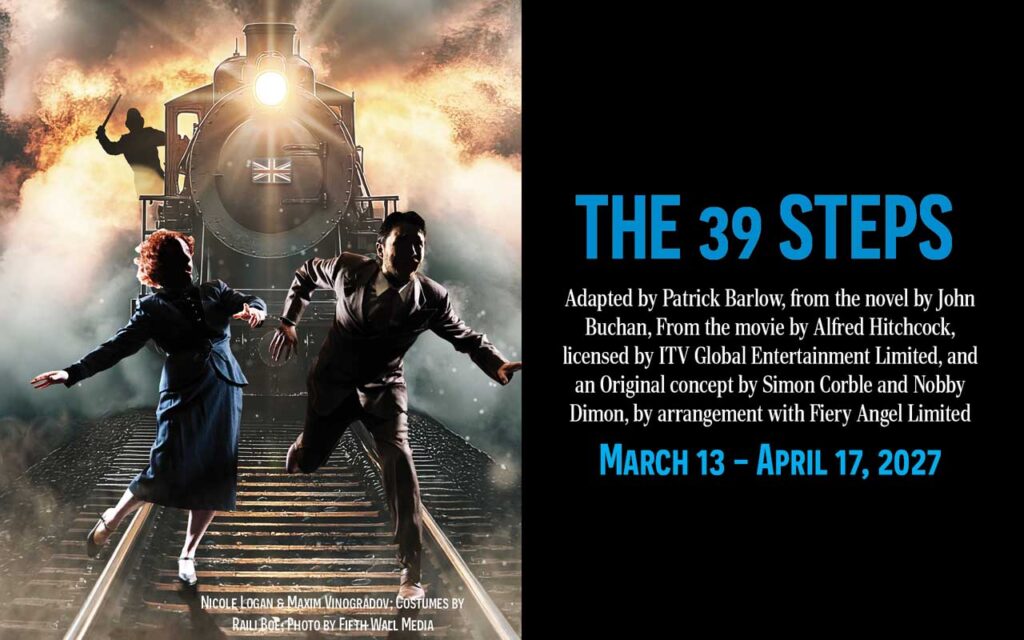
The fourth show is another modern classic, The 39 Steps. Probably the highest selling show in every theatre it ever plays in because it’s a great spy thriller based on a Hitchcock film where Richard Hannay gets caught up in a weird spy drama where a woman comes to his house and gets murdered and then he’s on the run trying to figure it all out. It’s a bit like The Fugitive in a way. It’s very theatrical and we have Mark Bellamy, who was a previous artistic director here directing it and bringing back some of the people he worked with in the past.
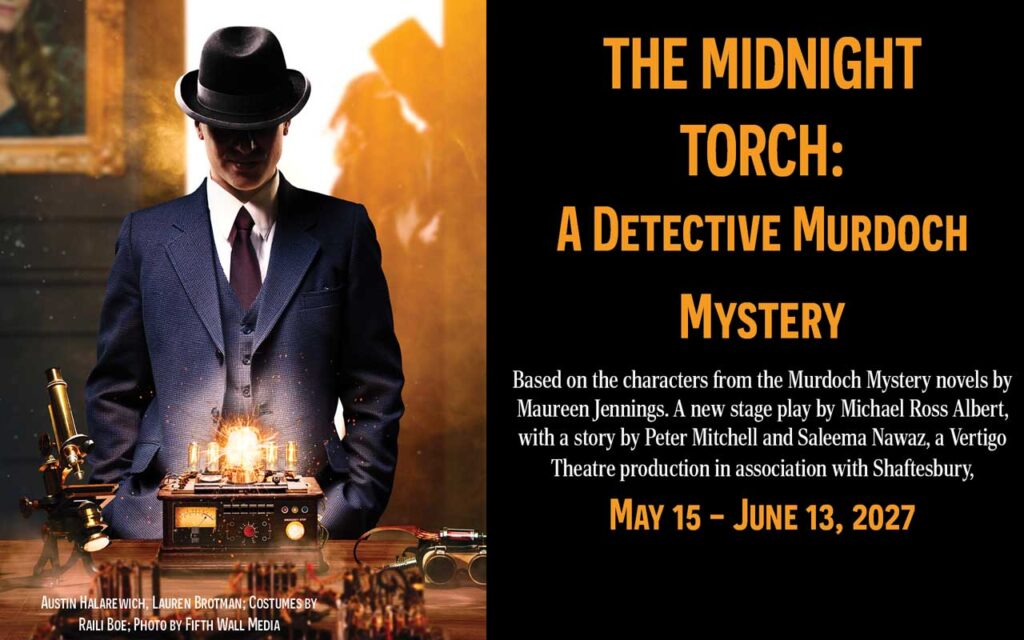
And then, you know, we’ve been working on this for over four years, and we are finally able to announce The Midnight Torch: A Detective Murdock Mystery is going to have its world premiere here. And what I love about creating art in Canada is the idea of mythologizing Canadiana. After next season Murdoch Mysteries will be the longest running Canadian drama in history. And so, on their 20th anniversary and our 50th we’re starting to branch out and we started working with Shaftesbury and CBC to create a live stage version which is a bit of a prequel.

Artistic Director Vertigo Theatre
So, we’re meeting Murdoch earlier in his career when he’s just a junior detective. And we get to see him meet Ogden, who in the TV series becomes his wife. And we get to see him build his relationship with some of the other characters like Crabtree and Brackenreid.
But if you’ve never seen the show, it’s also a standalone story. It’s a great mystery where Murdoch is invited to the home of this wealthy entrepreneur. And she had just come back from the Chicago World’s Fair and wanted to do something like that in Toronto and decided to invite a bunch of inventors over to her home. And then during one of the inventor’s presentations, he’s killed in the invention and then we realize it’s murder and suddenly Murdoch has to switch from his inventor hat and put on his junior detective hat and figure the whole thing out and we get to watch that as it happens in real time.
It’s very much like Murder on the Orient Express or The Mousetrap where there’s a lot of red herrings, big surprises, good gasps, and huge spectacle where we’ve got this huge machine that this guy built to transport himself and there are explosions and fireworks and so it’s a really exciting large-scale spectacle piece that we’re going to launch here in Calgary.
And it’s an excellent opportunity to partner up and take Maureen Jennings’ incredible books, which were turned into TV movies, then turned into a TV series by Shaftesbury, which is Christina Jennings, and Peter Mitchell, who’s the showrunner and came up with the concept for the story along with Saleema Nawaz. And he’s written 120-something Murdoch episodes, and then to get a writer like Michael Ross Albert to come in and make it a play. And it’s got humor, it’s got spectacle, it’s a chase, and I’m hopeful it will become, at some point in history, one of our Canadian classic pieces, so that we have something like The Mousetrap that’s Canadian.
And then, as a final topper for our season, I’m really excited about the opportunity of starting a second stage series. So, my dream would be that we have this main stage series in our playhouse, but then in our studio, we have some innovative, exciting work by locals, and by international artists that are working in the genre.
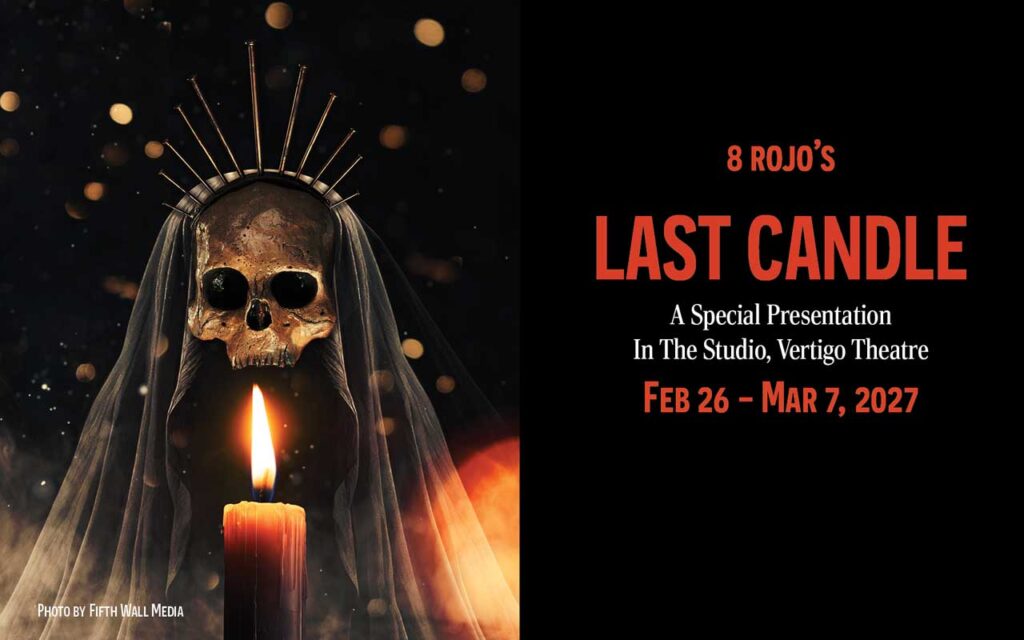
We have this incredible local company, 8ROJO, which is Javier Vilalta’s company. And they do physical plays. There’s no spoken text. And so, we have The Last Candle, which is based on a Grimm story called Godfather Death. And this guy gets this great power and deal with the devil, so that he can heal anybody. And of course, he ends up having to confront a very serious scenario down the road and make a big decision about it.
And so, for me, this really evokes what I want to look at for the future. You know, we’re creating new, exciting works. And just as we’ve seen some large Broadway musical shows try out stuff at Theatre Calgary or at the Citadel, we want to do that for our genre and I want Vertigo to be the place in the world that any new writer writing the genre comes to first. We want to be the home base for those works.