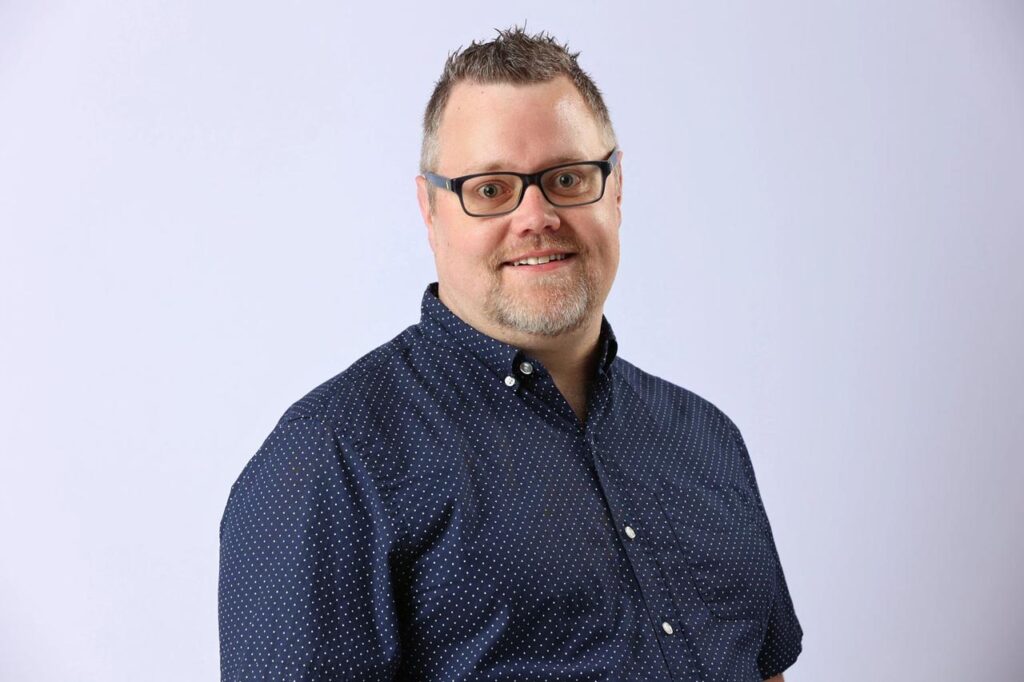
I met Dan Stephenson about eight years ago at a two-day event called WordCamp. WordCamp was a conference people could attend in order to learn more about how to use WordPress and build websites. I sat in on a couple of his sessions and I remember him telling everyone when they’re starting out that rather than paying for an expensive website the first thing they should do is build their own website and play around with it. Then once their business grows to a point where they can’t handle everything they need their website to do – that’s when they should give him a call. So, I did.
What I wanted was a website where I could publish a blog and provide a way for people to download my plays. And that’s what I have. And as part of my blog, I do interviews with other creative people in order to talk with them about their passions and creative process. And one of those people I’ve long wanted to interview and include in my blog is Dan. Because Dan isn’t just passionate about web design, he’s also passionate about magic, and podcasting, as well as being a highly regarded and popular web design instructor at the Southern Alberta Institute of Technology.
You can find out more about Dan at his website danstephenson.ca or tune into his podcast at firesidechat.ca where for the last thirteen years Dan and Matt Duborg have hosted a weekly fan focused discussion about the Calgary Flames. And if you’re looking for an emcee or booking Dan for some close-up magic for your event or holiday party then check out Dan’s magician and emcee website at magicdan.ca.
***
SECTION ONE: ARTIFICIAL INTELLIGENCE
JAMES HUTCHISON
Let’s start by talking about artificial intelligence. A couple of years ago I was watching YouTuber Tom Scott, and he was talking about artificial intelligence and how he felt that there was potential for it to change the world like the microchip has or the smartphone has. And AI is here to stay. Large language models are here. They are impacting work. They are offering a lot of tools. What are some of the impacts you think AI will have on the world?
DAN STEPHENSON
The way I’ve been talking about this with people is reminding them that in the industrial revolution we thought the machines would take our jobs and here we are still working.
If we look at other Canadians who work in Ontario in auto manufacturing, they work alongside machines to build cars. Machines haven’t taken their jobs. There are some jobs the machines are better at. Some the humans are better at. And they’ve learned how to work together. Humans are still needed in the process. And I think AI is going to be very similar.
Will there be jobs lost? Sure. There were jobs lost when cars came in too. Nobody needed a horse and buggy driver, but new jobs were created. When the self-checkout came in people said we’d lose jobs. Now we have grocery delivery people that we didn’t have ten years ago.
So, I think jobs will change. Some jobs will definitely go away. But like you say AI is here to stay, but I don’t think the large language model is the final form of AI if you will. Version one is never the end result, and I’d say we’re still on version one.
One of the ways I’m using it at work is I often get the same e-mail from students over and over and over again. It’s not worth my time nor was I hired to be an e-mail answerer. So, I have a LLM analyze my inbox and say the last seven times you were sent this e-mail by a student this was the answer. I never want the LLM to write the final product but if it can answer that e-mail and put it in the drafts folder for me to review then I can look at the draft and say yes, I approve of that or no, I want to tweak it a little bit – and it saves me time. Right now, we’re using these like chatbots in a way but there’s so many other things that we can use them for if we think of them as assistants.
JAMES
I can see it replacing things like writing commercials because so many commercials are just a formula. Name of sale. Bargain item. The address of the business. So, I can see for a lot of things AI would make sense, but I think you still need somebody to look at it.
DAN
Oh, sure. And we need that with any machine, right. We always need a human to look after the machine. Whether it’s an escalator or a rocket ship there’s always a human in charge of the machine and this will be the same.
And I think we’ll go from large language models to small language models. There’s nothing else in your computer that you use one application for. You use Word for word processing. You use Excel for spreadsheets. You use Gmail for e-mail. But we tend to try to use one LLM for everything.
I think there will be a point where if you need legal advice you will go to Legal AI. If you need financial advice, you’ll go to Finance AI. And you’ll have smaller more dedicated AI models trained for one topic. I think you could have one for building a deck if you wanted to. We could have one for home improvement. Maybe sponsored by This Old House or something. I think you’ll get these small language models you’ll subscribe to as you need them.
JAMES
What do you think artificial intelligence has taught us about human creativity and human abilities because often we gain insights when we compare one thing to another.
DAN
The biggest thing I’ve learned from seeing people use AI is, I think, that it shows how poor we are at critical thinking and the critical evaluation of content. I like to call LLMs the Alexafication of the internet.
Many years ago, we all got used to having an Alexa in our house and asking it for one answer. What is the weather? When was Tom Brady born? How old is Tim Allen? Things like that. We didn’t want to go look for the ten blue links in Google and vet the source and do the research. And for me the way I see a lot of people use these is as a search tool for give me the one right answer. And I think we’re losing that ability to say, “Okay, who posted this? Oh, it’s COVID-19 information. Do I want to get it from Joe Rogan or the CDC?” Right. What is the AI giving me and where is it getting it from and who is giving me that. And I think that’s the biggest thing I’ve seen in terms of human nature.
On the creativity side I think there’s always been a notion for handmade. Even now if you go to a festival handmade purses will sell for more than machine made purses. You know we’ve had computer generated art. We’ve had things like that. But I think that people want for the most part and will pay for art made by humans and creativity made by humans. I don’t think anyone is going to pack a Broadway Theatre to see a musical written by an AI. I think that there will always be a place for humans to do what humans do best and I think that’s to be creative.
SECTION TWO: SOCIAL MEDIA
JAMES
I wanted to talk a little bit about social media. I notice that you’re on social media including what I still call Twitter, and you post regularly often with a humourous twist or a comic idea. And I think social media is flawed in a number of ways. Facebook to me was always a weird thing because it was always three audiences. You had family. You had friends. And you had co-workers, and Facebook put these three groups into one social group that maybe in a small town it used to be that way but often those were individual spheres in our lives. And so, I think it’s fundamentally flawed. What do you think about how social media is designed and where do you see it heading?
DAN
Remember what Facebook was originally. It was just for college kids. So, it was never designed to be what it is. And I think it opened up, and people just started to add anybody, and I think that Facebook got away from the creators because of what we wanted it to be. And I think at one point people weren’t thinking about social media the way we do now. We didn’t think we were going to post stuff we didn’t want our boss to see. I mean if you look at early social media it was the salad I’m eating for lunch. Here’s the picture of my birthday. It was all very mundane things. It was almost internet small talk in a way, and I think that we have evolved past the general-purpose social network.
I have my Facebook set up so I have different lists of people. And I can post different things to different groups but that takes a lot of work, and nobody knows how to do that. When I look at my Facebook feed most of it is not useful content. It’s people posting pictures of their kids or their grandkids. It’s people posting stuff like that or it’s all business marketing. I think that Facebook has really gone downhill because we don’t want that.
Where’s social media going is something I’ve been thinking about quite a bit. The thing I like about Mastodon is that anybody can start a Mastodon server. It’s all federated. And so, you can create your own community. You can decide if you want other communities to be part of it or not. I mean back in the day that’s what happened before social media. You would go to a Meetup with these people, or you would go to that event or this bar to talk to those people, and you get that sort of thing with Mastodon. So, let’s create this Mastodon for web developers or one for playwrights or one for you know grandparents in the city. I think we’re starting to see smaller social networks come up. I don’t know if your neighbourhood uses Nextdoor. I know mine does. It’s a social network just for local areas and local people. So, I think we’re seeing smaller social networks like that. I can tell you what my ideal social network would be but it’s never going to happen.
JAMES
I would love to hear what your ideal social network is.
DAN
I’ve always said that we should be in charge of our content. Instead of me posting it on Facebook or me posting on Twitter. I wish everybody had their own website of some kind. Call it a microblog and you post your own content there. And do you remember the days of RSS readers. We would just subscribe to the RSS reader for the people we want. So, I’d say, “Hey I like James. I’ll subscribe to James’s page. I’ll subscribe to my dad’s page. My mom’s page.” And then I can show different things to different people or post those differently on parts of my microblog, but I own it. It’s not on Facebook. It’s not on Twitter. It’s not on Mastodon. It’s not anywhere like that. It’s my content on my site to be portrayed how I want and if I want to get rid of it, I can do that as well. But it will never happen because there’s no money in that and the average person would not put up a site to do that.
JAMES
You know in order for societies to survive they have to have an ability to create consensus. And I originally saw social media as an opportunity to debate and eventually arrive at consensus. And I had hopes that social norms would evolve because it’s a social thing so social norms would develop so that people would figure out how to have civil conversations overall. But now I don’t know what’s going on. It seems to be very divisive and I’m wondering what’s happening. Is it a fault with the platforms or is it a fault with humanity.
DAN
The platforms try to get you to stay on there longer to see more ads. So, the platforms are going to show you what you want to see. And I think when you’re on Facebook you’re going to get the filter bubble, right. They’re going to show you your political views. They’re going to show you the things that are going to keep you there longer. I think that’s exactly how they’re designed. It’s showing you what you want to see so you can see their ads. I don’t think it’s the town square. I don’t think it’s designed to be the town square. I think Facebook was designed for you to talk to your family about things you like and things that work for you. I’ve thought about how could you engineer the town square and in our current society I don’t know that it would work. I think Reddit is the closest thing we get to that and even that does not work most of the time.
JAMES
Yeah, the great advantage of the internet and these platforms is it does gives voice to minorities and these people can find each other. However, it also gives voice to minorities who might have extreme views. And they can find each other.
DAN
And I think the issue too James is going back to what I was saying earlier I think we as humans also need to know better how to vet those voices.
JAMES
Yes, how many of us have found ourselves reposting something that on second examination was not exactly truthful or real or genuine.
DAN
Yes, but also truthful, real, and genuine can change based on who you are and what you believe to be the canonical sources. And I think we as a society need to do a better job to understand that. We don’t tend to stop and say let’s check the definitive source and that’s why I think Facebook can be so divisive because I’m seeing James and I trust James and James posted this. Well, did James fact check it?
And if you think back to when you got a newspaper – newspapers were fact checked by a publisher and an editor. I remember my mom once said, “There’s a lot more bad things going on in the world now.” And I said, “No there’s not mom. They just didn’t report on them in the Calgary Herald because it wasn’t relevant to you as a Calgarian. There were still children being abducted in Detroit and bombings happening in Gaza, but they didn’t affect you.” Now that we can see all of that and we don’t have an editor you have to be the editor. You have to be the publisher. And we don’t know how to do that.
JAMES
What do you think are some of the good things about social media?
DAN
I think social media is a great way for people to connect. I think we saw that during the pandemic. And I have family in the States and now I can see pictures of the grandchild or pictures from the soccer game. And I think social media gives everyone who wants a voice a voice and it lets us follow who we want to. If you like comedy, follow comedians. If you like sports, follow your sports team. I think it’s a great way to find your tribe.
SECTION THREE: MAGIC
JAMES
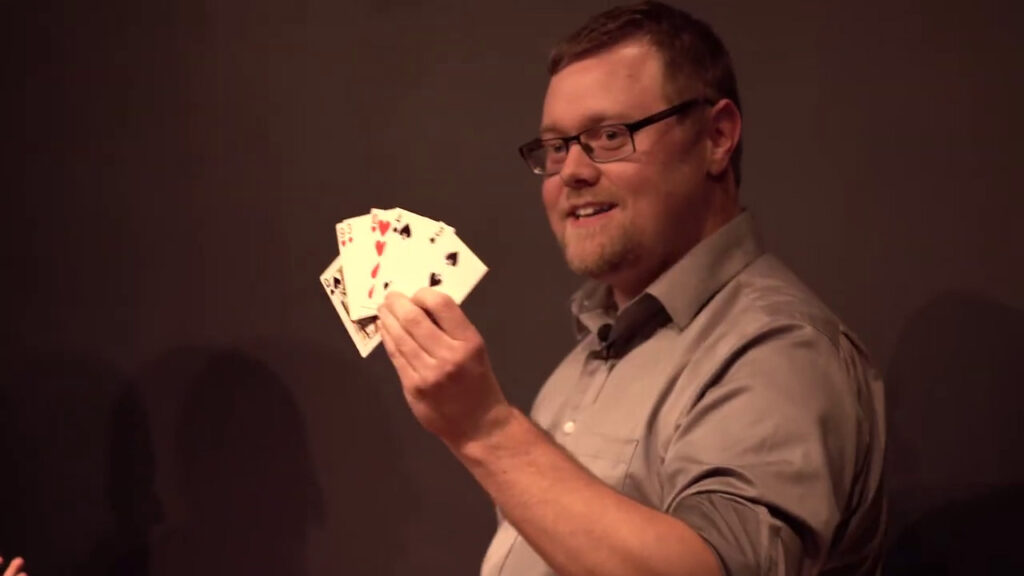
You have a long interest in magic. I know you perform at corporate events. You do weddings. Family functions. You do close-up magic. I’m wondering first where did that love of magic begin and secondly what do you think it is audiences love about the art of illusion?
DAN
I think as a kid I was always a performer. I was into stand-up. I was into improv. I was into performing every chance I could. One of the things I loved best about being in scouts was getting to do skits around the campfire. I think I’ve always been a performer. I think magic was another way to do that.
When I was in high school there were the band kids. There were the drama kids. There were the kids who could play an instrument. Nobody was doing magic. And it was a neat way to get some attention. And it almost becomes addicting. I mean, you see a reaction from somebody, and you want to do more of it and more of it and more of it and for me it was just another way to connect with people. I can go to a bar on my own and I can sit at the bar, and I can do some magic for the person next to me and immediately you have a connection instead of just making small talk with that person.
As far as why people love it. I think it’s a few things. I think there’s still this notion from a lot of people that magic is for children, and I don’t agree with that, but I think it gives us that childlike wonder so many of us lose when we become adults. When we know how everything works. It’s our job to understand the world. It’s our job to know what’s going on in our lives and if for five minutes I can make you forget some of that and feel a little bit more like a child everybody loves that.
I think also, we’ve always had a wonder of the magical and the mystical and the not knowing. I mean look back at human history and how many stories there are about fairies and elves and all these things that don’t exist. We like that kind of mysticism in our life.
And the magic I do is close up magic where it’s right in somebody’s hand and I think when you’re seeing it and it’s happening to you it makes it that much more special than if it’s happening on a stage. And for a second you wonder am I magical. Did that guy really do that right in front of my eyes. It’s not TV. It’s not a screen like we’re so used to seeing. It’s something live and in person.
JAMES
Who’s a favourite magician. I mean there are some amazing ones. I love Penn and Teller. And you know at the Fringe Festival you’ll get a magician, and I almost always go to a Fringe Festival Magic show because I know what I’m getting. I love illusions.
DAN
I think there are different answers to that. So, I mean Penn and Teller I love. They’re a great set of magicians but that’s a very different type of show than what I do. You need a warehouse and a crew and a stage because it’s like touring a rock show. But in terms of my favourite magicians, it would probably be people you’ve never heard of like Doug Henning who was born in Winnipeg. And a gentleman named Michael Ammar out of the states. He’s someone who I bought early training tapes from in the 80s. He was one of the top training magicians that trained you how to do magic. And so, I fell in love with him because he was my teacher in a way if that makes sense. You always love that person teaching you. And then there’s a gentleman out of Ontario named Jay Sankey. And I loved growing up that he was Canadian and he had some really innovative ideas when I was getting into magic. And he has a similar sense of humour to me. So, he was someone that I emulated.
JAMES
How important is mentorship in magic and then beyond magic for life. What are your thoughts about that?
DAN
I think we all need somebody that’s doing the thing we want to do. Whether that’s magic. Whether that’s being a better playwright. Whether that’s being a politician. You know someone that has gone before us and can provide us sage advice. What to do. What not to do. That sort of thing is to me a mentor. But I also think a good mentor has to let you try and fail and get yourself back up.
I think one of the issues we have today in society is so many people are introverts and want to stay in their house and learn from reading the internet and I think we need to get out and deal with human beings. I mean even WordCamp, which is where you and I met, was a form of mentorship, right. It was people who weren’t great with WordPress coming to meet all the geeks who knew what they’re doing. A lot of people think mentoring is almost like a knighting ceremony where thou shalt be my mentor from here on out. But I think just learning from those that have gone before you is a form of mentorship and I think it’s hugely important.
SECTION FOUR: TEACHING
JAMES
So, we were talking about performance. Because you’re not just a magician, you also emcee events. You’re also an instructor at SAIT. And all of those mean you have to stand up before an audience. And when I think about teachers that I admired in school they didn’t just teach they made learning fun. So, what are the differences and similarities between presenting a magic show and teaching students.
DAN
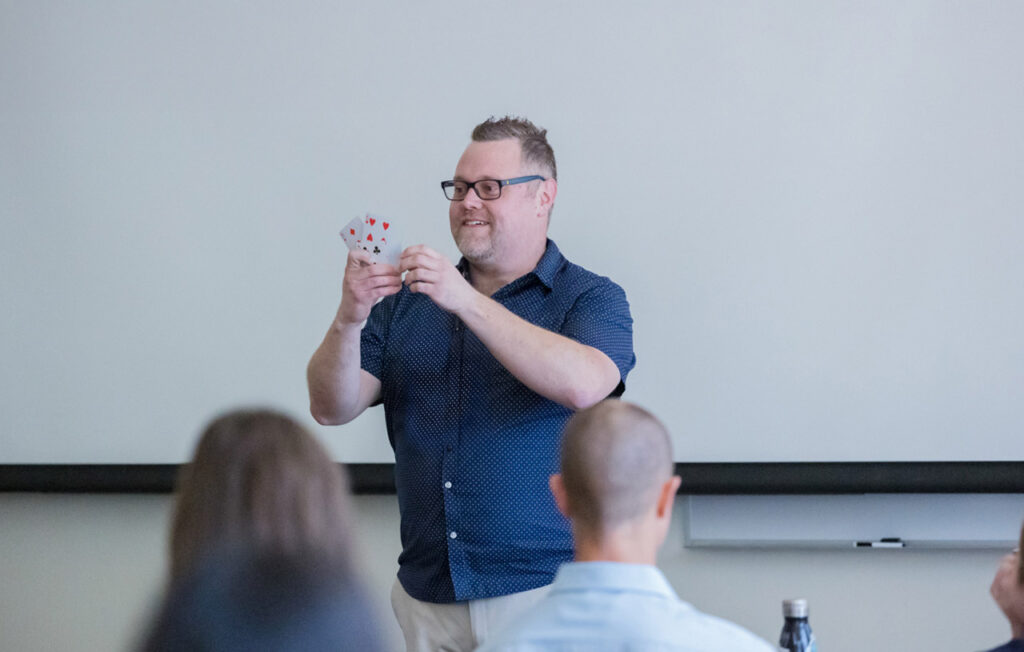
I think my performing background has made me a better teacher. This generation has a short attention span. It’s my job as a teacher to be able to engage you. Grab your attention. And you’re a writer so you know the story arc – beginning, middle, and end. For each class there needs to be a story. There needs to be a beginning – a problem. I’ll let you guys try to solve it. Oh, you couldn’t solve it. Let me show you how I’d solve it. And a conclusion. And I think that magic is very much the same. How are we going to make the card jump from my hand to your hand? How are we going to make the dove appear. And I like to think I’m not an entertainer nor an educator. I’m an edutainer. And my job is fifty percent the material and fifty percent making it engaging and teaching you in a way that you will be engaged. But I also have to tap it down because I don’t want to be the jester. I don’t want people to come to class just to hear the jokes and see the magic and not take part in class.
JAMES
I do have to ask. Is Edutainer on your business card?
DAN
SAIT won’t put it on there but if I was running my own consultancy, it would be.
JAMES
You’ve been teaching now for a number of years – how has your teaching evolved over time.
DAN
I think when I first started like so many teachers I wanted everyone to like me and today, I don’t really care if you like me or not. I’m not here to be your friend. I’m here to get you industry ready. And that’s what SAIT has always prided itself on. We have two years to get you from wherever you are to being employable. And I think I focus on treating the classroom more like a workplace than I used to. I mean now if somebody doesn’t come to class I don’t care. At one point I felt hurt that you didn’t come to my class. Now the way I look at it I’m going to teach the class whether you’re there or not. If you missed it, your problem not mine. I think in my early days I was trying to help everybody. I was trying to make sure they got what they needed. I was trying to make sure their homework was done. Now, I’ve realized if you’re not doing your work, I can’t do that work for you. I can’t chase you around and make sure your work is done and make sure you’re understanding – you have to meet me halfway.
SECTION FIVE: WEB DESIGN
JAMES
So, let’s talk about websites and branding. And you’ve been building websites for a long time – I was reading on your website that your parents got you a computer and the internet, and you went “Wow!”
DAN
Back in 1997.
JAMES
1997. Wow and so you know websites are a great opportunity for artists and individuals with a passion for a topic to have a presence and a place to connect. But not everyone knows best how to design a website. What are a few things people should really be aware of when they’re looking at that first website for whatever they want to do.
DAN
I think too often we look at a website as a piece of art, and I would look more at your website like a business card. Get the important information front and centre. If nothing else your website should have your name. What you do. And how to contact you. If you can’t do anything else put those things on a webpage.
I think too often we’re looking for big images and videos and stuff like that that really just wastes my time and I’m not finding what I want. We’re trying to do these snazzy designs that are really neat to look at but aren’t that functional. So, I think boil it down to who are you. What do you do. And why do I want to buy it from you. And one thing I tell my students is, every website is designed to sell something – a product, a service, or an idea. Figure out what you’re selling and who you’re selling it to and what information those people need to buy it. Whether you’re running for mayor or selling shoes or want to be hired as a consultant.
JAMES
Well, I think the other important thing is search engine optimization. So on that first page just having a two-line introduction about who you are and what you do and what people can get there is really important for Google and other search engines so they can go – oh this guy is a playwright. This guy is a jewellery maker. This guy is a web developer.
DAN
There’s a lot of people out there who charge a lot of money for search engine optimization. The big rule that Google says that I always remind people is – if humans like it – Google will like it. Build it for humans not for robots. The biggest thing Google is looking for is just trying to find the words that are relevant to what you do on the page. So, like you said a simple description of here’s what I do and here’s where I do it. I’m a Calgary based Jewellery maker. I’m an Edmonton based blacksmith. That’s going to do a lot more for you than you think.
SECTION SIX: FIRESIDE CHAT PODCAST
JAMES
One of the other things you do is a podcast called the Fireside Chat.
DAN
Yes. Thirteenth year.
JAMES
I did listen to your first episode this year. It’s your 14th Season of the Fireside Podcast. And it’s you and Matt Deborg.
DAN
Matt Deborg yup.
JAMES
And you host Fireside Chat and it’s a podcast focused on The Calgary Flames. So, I’m interested in knowing the origin story of this podcast and what makes you and Matt such big fans of the Flames.
DAN
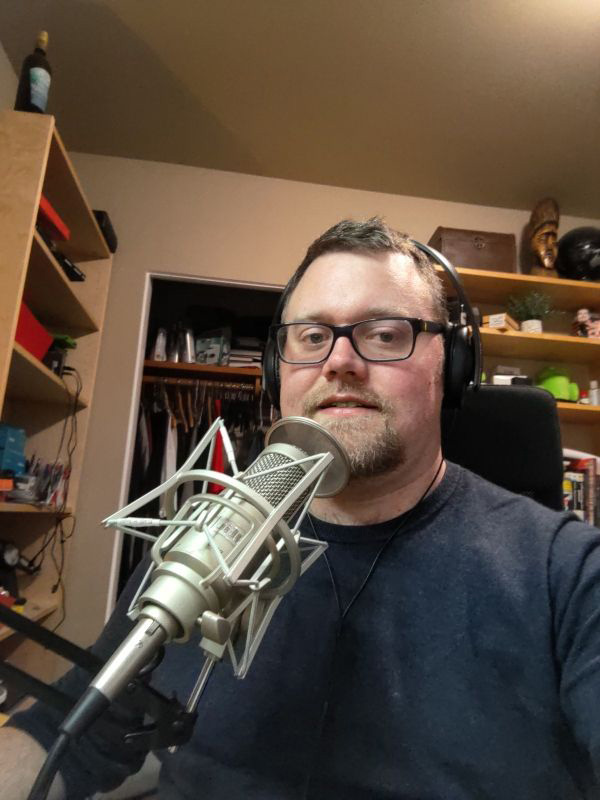
It’s sort of like what we were talking about earlier that makes the web powerful is that anyone can have a voice. When I was a kid, I always had this desire to be some sort of a broadcaster. I always thought it would be neat to be on the radio. I used to record my own recaps of Flames games I’d watched. I think we all did some of that to some extent, but I knew I never wanted to get into radio, and then Podcasting came out, and it was a way for anyone to have a voice. And I’ve never been good at written content. I’ve always felt I’ve been better orally. To describe and talk about things as they’re happening instead of writing a paper or writing a position on something.
So, one day I thought this would be neat and Matt and I went to a bar and talked hockey and recorded it and put it online and a hundred people listened. And it’s like, okay there’s something here. And I think the thing that people love James is – we’re trying to do things differently. We’re not the big radio station that has to fill eight hours a day of Flames content and we’re not going to make a mountain out of a mole hill just to fill time. People ask, how long is your show? And I say as long as we need to talk about this week’s story. And we want you to feel like we’re your Flames friends sitting around talking hockey. And we have a lot of people say, “I’m not living in Calgary. I don’t have Flames friends around me, or I’m new to the city and I don’t know a lot of fans. You guys are a great way to get into the team from a fan perspective.”
JAMES
Well, from a fan perspective the new season is just starting up. It’s the 17th of September. So, what are your thoughts about the kind of season we’re going to see from the Flames. What are your hopes and expectations as a fan?
DAN
I’ve had to learn as a broadcaster that my hopes and my expectations are often different. This team’s rebuilding. This team is going through a bit of a resurgence and bringing young talent through the organization. Something they’ve really never done properly. In the 90s they did it but it’s more because they couldn’t afford to compete with the U.S. teams when there was no salary cap. If you look at Stanley Cup teams, they usually are very bad and then they get better. Then they have this pinnacle of you know a four-year window and then they get bad again.
The Flames have been perpetually bad to mediocre and so I think this is their chance to rebuild. Yes, it sucks as a fan, but let’s let the young players play. Let’s let the young players make mistakes. Let’s let the young players learn this game and in three years or whenever the new arena is ready, we might be able to compete and go on a real run.
I always look at Fireside Chat as what’s the story this week and that’s the way that we prep our show. And the story of the season is going to be how the young guys develop. I mean Dustin Wolfe great story last year. Can he continue that? Will he look as good. Will he step back? What will we get out of some of these young players like Connor Zary and Zayne Parekh. They’re going to make mistakes. How do they bounce back when they make a mistake. I think this year’s story is the young players learning the NHL game.
JAMES
Do you think enough people allow for that cycle in terms of a team.
DAN
I think fans know its coming but I think fans want instant gratification and they always want their team to do well. And we see this on social media. We see a lot of fans out there saying the Flames won a game they should trade for this top guy, and they just want their team to win every year, and I don’t think fans want to invest in the down years.
JAMES
I think there are the fans who have realistic expectations and as a fan all they expect from the team is that the players are giving it their all. That the coaches are dedicated to it. That the management is behind them.
DAN
Yeah, and that’s what I’ve said, as long as the Flames are doing the best they can that’s all I care about. And you know I think a lot of people don’t care how well The Flames do as long as they do better than the Oilers. And I think some of that is the tribalism as well, right. My team needs to do well because it’s my tribe and it’s part of my identity and that sort of thing.
But when I look online, I don’t think people understand the business of the sport. They just want their team to win now, and they don’t understand that they need to be bad for a couple of years. And also, people don’t understand these are human beings. It’s not your Xbox game where you can just trade whoever you want. These are human beings that when we talk about trading or moving, we have to factor that in too.
JAMES
So, when it comes to life or trying to win the Stanley Cup how much of that is mental and how much of that is physical and how much of that is luck do you think.
DAN
I think it’s more mental and psychological – I’d use both words – than people give it credit for. I mean a lot of its mental. You’ve got to be willing to say, “Yeah, maybe I had a bad game, but I need to brush that off and keep going.” I think we also don’t realize the psychological toll being an athlete takes on these guys. I’ve talked to a few of them, and they say we travel in the middle of the night from city to city. I sometimes have no idea where I am when I wake up. I’m in another hotel that looks just like the last hotel. I was in New York but it’s not like I left and saw the Statue of Liberty. We travel at one in the morning. I haven’t seen my kids for two weeks. I think those are the kind of things that can get in their head and keep them from playing the way they need to play and that’s why I say mental and psychological. You know you have one bad game and you’re getting booed by the away fans and that gets in your head, and I think there’s sort of the hockey mentality and also you need to remember you need to have a work kind of mentality as well. This isn’t your whole life. This is your job, and you’ve got to find a way to go do it.
I think it’s more mental than you might think. And we often see that in the finals where one team will lose but then come back and win. And you can tell that it’s their will to win that gets them there. And you know, let’s be honest, all these guys are the best at what they do. There’s no bad NHL player. I mean there’s relatively poor NHL players but they’re a hundred times better than you or I. These are all the best players in the world so theoretically any group of twenty-five of them should be able to beat any other group of twenty-five of them on any given night.
SECTION SEVEN: PASSIONS
JAMES
We’ve talked about a lot of different things, and you do a lot of different stuff. I’m curious to know how passion plays a part in your life because you don’t do 400 podcasts over 14 seasons unless you have some passion for the Flames and hockey. And you don’t perform magic unless you have a passion for it. And you don’t get up in front of a class and teach students – I don’t think – unless you have a passion for the subject matter. So, how does passion play a part in your life?
DAN
I think I learned early on in my life that I want to pursue my passions. I want to do the things that bring me joy or intrigue me or make me think. I want to share my passions and follow my passions. I don’t want to do things I’m not passionate about. Because to me it’s a waste of time. I mean there are things we all have to do. Dishes aren’t passion. Laundry’s not passion. But for those major buckets of my life, I want to spend my time doing the things I love to do. And not only love to do but I can give back somehow. My Flames knowledge. My web development knowledge at SAIT. My ability to perform for an audience. I think part of my passion is not just what I love but how I can share it with the world. And I won’t take on something new unless I’m passionate about it. There’s a tonne of things I would love to do but I know I don’t have the time to get into them the way I’d want to and really become passionate so is it worth diving in halfway. And I think we all know that person in our life that every week has a new hobby. And hasn’t really found their passion. And I guess I’m fortunate that I found so many of them in my life.
JAMES
So, I have one last question. People talk about a perfect day, but I’m interested in what sorts of things would make a perfect year and if you had a year where you could plan and do whatever you wanted regardless of real-life limitations how would you spend your time? What would you do?
DAN
Since you sent me that question, I’ve been thinking a lot about it because that’s so, I guess blue sky it’s hard for me to go there. I think in a perfect year I would like to be able to pursue the passions I want in the dosages I want. I mean I love teaching, but it would be really cool for a year if I could follow the Flames and go to all thirty buildings and see what they all look like. I would love to get the chance to perform magic in a Vegas theatre or a large theatre and pursue that passion. I guess it would be a year where I could pursue my passions to the level I like even if it means failing. Even if I book a big theatre and just two people come to see my magic show at least I tried it, right. I’m not afraid of failing. And if we’re going to make this blue sky I’ve always wanted to be the host of The Price Is Right so if I’m going to have a perfect year I would love to host at least a handful of episodes of The Price Is Right and since I’d be in California I might as well perform at the Magic Castle as well while I’m there.
***
To learn more about Dan, visit his website at danstephenson.ca. You can also listen to his long-running weekly podcast about the Calgary Flames at firesidechat.ca, where Dan and his co-host Matt share insights and stories for dedicated fans of the Flames. And if you’re interested in hiring Dan as an emcee or booking him for some close-up magic for your corporate event or holiday party, check out his magic and emcee services at magicdan.ca.